Zcash ETF, Solana on Wall Street, and a $91K Bitcoin: A 24-Hour Crypto Market Briefing
The last 24 hours in digital assets delivered a familiar mix of old and new. Bitcoin pushed its way back above the $91,000 mark, reviving talk of cycle highs and fresh inflows. At the same time, a series of headlines showed how far the industry has moved beyond simple price charts: a proposed Zcash ETF, another step toward a Solana fund on a major US exchange, a European tokenisation play choosing Avalanche, a US bank experimenting with stablecoins on Stellar, and data regulators in Thailand telling Worldcoin to pause operations.
Viewed together, these stories say less about day-to-day volatility and more about the structural forces reshaping crypto: mainstream financial firms are becoming more comfortable with blockchain-based assets, protocol teams continue to experiment with tokenomics and infrastructure design, and regulators are sharpening their tools around investor protection and data privacy.
Below is a deeper look at what happened and why it matters.
1. Grayscale’s Zcash ETF Filing: Privacy in a Regulated Wrapper
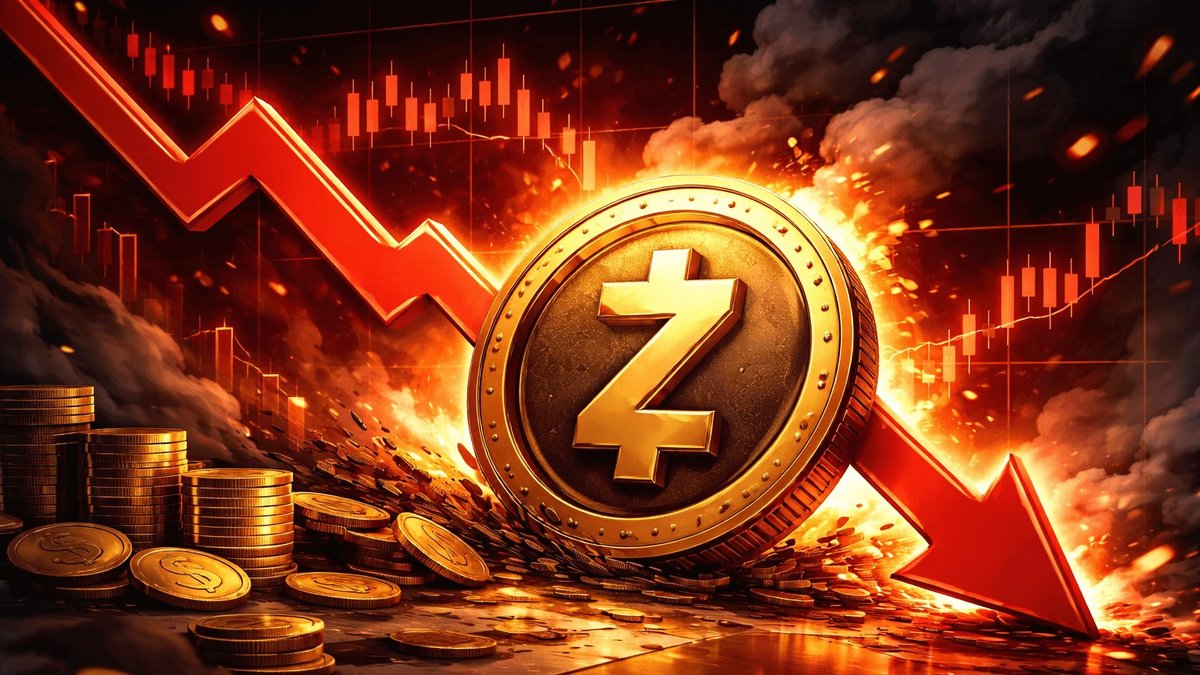
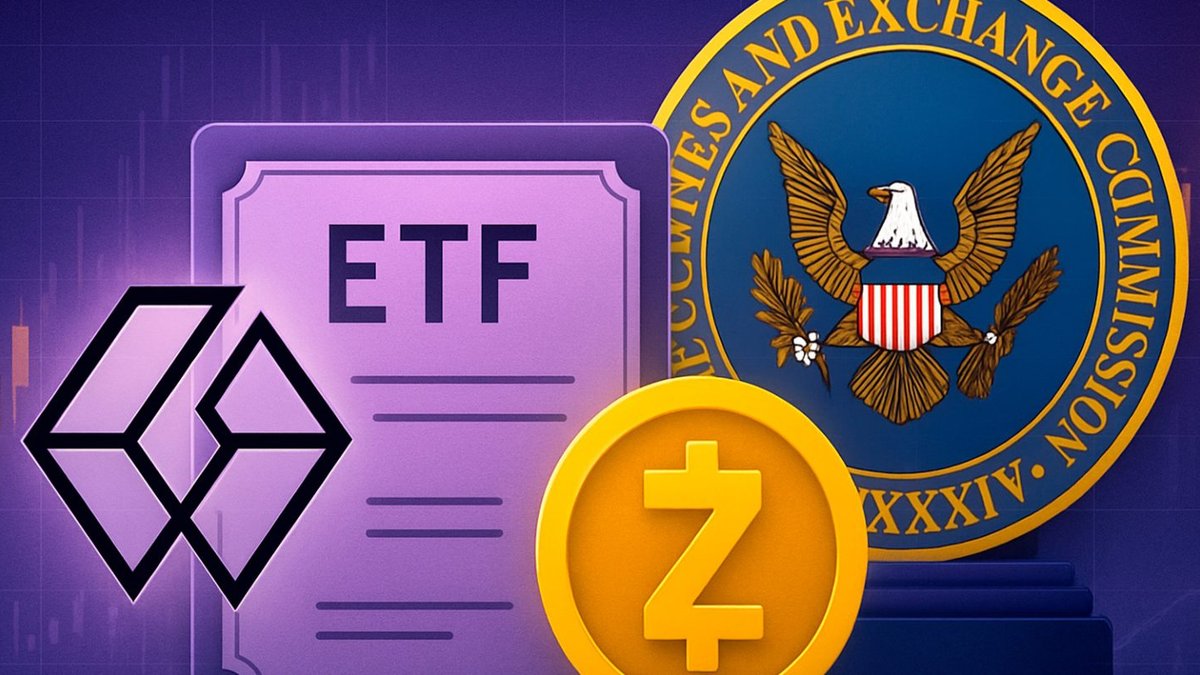
The headline item for many market observers is Grayscale’s registration filing with the US Securities and Exchange Commission (SEC) for a Zcash ETF. If approved, it would be the first exchange-traded fund tied directly to Zcash, a privacy-focused cryptocurrency best known for its use of zero-knowledge proofs to enable shielded transactions.
Two elements make this development especially notable:
• Regulated access to a privacy asset. Historically, privacy coins have sat at the edge of regulatory comfort. Some exchanges have delisted them, and several jurisdictions have debated how to handle assets that allow users to mask transaction details. An ETF structure does not change the underlying protocol, but it does change who can access exposure and under what conditions. Institutional and retail investors who cannot or do not want to self-custody ZEC could gain price exposure through a familiar brokerage account.
• Ongoing convergence between crypto narratives and traditional products. Bringing ZEC into an ETF wrapper continues a broader trend: assets once seen as distinctly “cypherpunk” are being repackaged into vehicles that sit squarely inside securities law. For some, that looks like a contradiction. For others, it is simply the next stage of market maturation, where different user segments interact with the same underlying asset in different ways.
It is worth emphasising that a filing is not an approval. The SEC will review the proposal, and its response will offer another data point on how regulators currently view privacy-focused assets when they are embedded in mainstream financial products. Regardless of the outcome, the move illustrates how asset managers are still searching for distinctive exposures beyond the now-crowded Bitcoin and Ether ETF space.
2. Bitcoin Above $91,000: More Than Just a Number
While structural headlines grabbed attention, price action still mattered. Bitcoin reclaiming the $91,000 level is important less because of the specific number and more because of what it implies about positioning and sentiment.
After periods of consolidation or drawdown, moves back above widely watched levels serve as informal checkpoints. They prompt questions such as:
- Are ETF inflows and corporate/treasury demand still strong enough to absorb profit-taking and macro uncertainty?
- How are derivatives markets reacting—are funding rates and open interest rising in a measured way, or is leverage building up quickly again?
- Is the rebound accompanied by broader participation in other assets, or is Bitcoin increasingly trading as a standalone macro asset?
Politically, the move higher occurred against a backdrop of rhetoric from former President Donald Trump, who criticised the New York Times, described his 2024 election win as “overwhelming,” and argued that the economy and markets are recovering strongly. Regardless of individual views on those claims, they highlight a simple point: crypto markets no longer sit outside political narratives. Investors increasingly have to consider how fiscal policy, regulation and public commentary from senior officials may influence risk appetite, even when the direct link to on-chain activity is subtle.
3. Solana, Stellar and Avalanche: Traditional Finance Picks Its Chains
Several announcements in the past day underscored how traditional financial firms are not treating “crypto” as a single monolith. Instead, they are choosing specific networks that match their technical and regulatory needs.
3.1 Franklin Templeton’s Solana ETF Advance
Franklin Templeton, a large US asset manager, filed a Form 8-A with the SEC for its Franklin Solana ETF. In the ETF launch process, this type of filing is one of the final administrative steps before shares can be listed on an exchange.
Solana has built a reputation as a high-throughput smart contract platform with a growing DeFi and NFT ecosystem. An ETF tied to SOL would extend the pattern inaugurated by Bitcoin and Ether: liquid layer-1 tokens represented in regulated funds that can be bought and sold via traditional brokerage channels. For the ecosystem, this is less about short-term price impact and more about distribution. Every new wrapper that reaches a different investor segment changes who can hold the asset and for how long.
3.2 US Bancorp Experiments With Stellar-Based Stablecoins
In parallel, US Bancorp, the fifth-largest bank in the United States, is reportedly testing a stablecoin platform on the Stellar network. Stellar was designed with cross-border payments and asset issuance in mind, so a pilot of this kind fits its core use case: moving tokenised representations of fiat currencies between institutional participants efficiently.
From a risk and infrastructure perspective, this sort of experiment matters because it treats a public blockchain as a payment rail rather than as a speculative venue. The key questions for banks are not only technical performance—latency, fees, uptime—but also compliance and operational integration. How do on-chain transfers fit into existing anti-money-laundering frameworks? How are keys managed? Which segments of the customer base are allowed to interact with the new system?
3.3 Avalanche Chosen for EU Trade Settlement via Securitize
On the tokenisation front, Securitize—a firm focused on digital securities—received full regulatory approval from EU authorities and selected Avalanche as the network for a European commercial payments and settlement system.
Tokenising financial instruments and payment flows is often discussed as a long-term theme. Concrete projects such as this give analysts more to work with when evaluating that narrative. Using Avalanche for settlement suggests that, for certain use cases, its combination of finality times, cost profile and tooling meets institutional requirements. It also reinforces the idea that blockchains can serve as back-end infrastructure for financial processes that end users experience as relatively conventional banking or brokerage services.
4. Building the Plumbing: AVAIL, MegaETH and a New DeFi Fund
Beyond the interplay between blockchains and traditional institutions, a cluster of protocol announcements highlighted ongoing innovation in market structure and Ethereum-adjacent infrastructure.
4.1 AVAIL and the Quest for Unified Liquidity
AVAIL launched its Nexus mainnet, presenting it as a way to create more unified liquidity across different blockchains. In practice, fragmented liquidity is one of the most persistent frictions in multi-chain ecosystems: assets, users and applications are spread across isolated environments, and bridging between them introduces risk and complexity.
Projects like AVAIL aim to address this by providing common data and settlement layers that different chains can plug into. For developers and users, the potential benefit is not only convenience but also risk reduction: fewer bespoke bridges and more standardised primitives could lower the probability of the kinds of security vulnerabilities that have plagued cross-chain systems in past cycles.
4.2 MegaETH’s Pre-Deposit Bridge and Retro Programme
MegaETH, another Ethereum-adjacent project, introduced a Pre-Deposit Bridge accompanied by a retrospective rewards programme for early users. Technically, pre-deposit mechanisms allow participants to signal or stage their assets ahead of full mainnet launches or feature activations, giving teams a clearer picture of likely usage and helping spread adoption costs over time.
Educationally, this is a useful example of how protocols try to align incentives. Rather than launching a network and hoping users arrive, some teams reward those who engage with test environments or early infrastructure. The design details matter: eligibility criteria, transparency around allocations and clear documentation help build trust; opaque or overly complex programmes can have the opposite effect.
4.3 DWF Labs’ $75M DeFi Fund
Adding a capital markets layer to this technical work, DWF Labs announced a $75 million DeFi fund targeting perpetual DEXs, money-market protocols and yield-generating applications across networks such as Ethereum, BNB Chain, Solana and Base.
Funds like this play two roles in the ecosystem. On one hand, they provide risk capital to early-stage projects that might struggle to secure traditional financing. On the other, they influence the direction of innovation by signalling which categories—perpetuals, lending, yield strategies—currently attract sophisticated attention. For observers, the existence of a dedicated DeFi fund at this scale is a reminder that, despite market cycles, there is still active experimentation around on-chain market infrastructure.
5. Governance and Tokenomics: Cosmos ATOM Reconsiders Its Model
Not all of the day’s news involved new products or partnerships. In the Cosmos ecosystem, the community initiated a process to study and collect ideas for a new tokenomics model for ATOM, the network’s flagship token.
Revisiting tokenomics mid-flight is challenging. Changes to issuance schedules, staking rewards or governance rights can have direct impacts on validators, delegators and application teams. Yet it is also a sign of maturation. As networks gather real-world data on security costs, user behaviour and application demand, earlier design assumptions sometimes need to be updated.
From an educational perspective, ATOM’s ongoing discussion highlights several important questions:
- How should a base-layer token balance its roles as a security budget, a governance asset and, potentially, a store of value?
- What metrics—staking participation, chain usage, cross-chain adoption—should guide adjustments to issuance and reward policies?
- How can changes be implemented in ways that are transparent and predictable rather than surprising core stakeholders?
The process is still at the research stage, but the fact that tokenomics is being treated as a living system rather than a fixed one is a learning opportunity for other projects facing similar trade-offs.
6. Miners, Equities and Funding the Next Phase
On the mining and corporate side, Hive, a Bitcoin mining company, announced a $300 million equity issuance following a record quarter. Equity raises of this kind are not unique to crypto, but they underscore how mining businesses straddle two worlds: they are sensitive to Bitcoin’s price and network dynamics, yet they also have to operate under capital-market expectations about growth, dilution and balance-sheet management.
For analysts, a few questions naturally arise:
- How will the new capital be used—debt reduction, new facilities, hardware upgrades, or diversification into adjacent lines of business such as AI compute?
- At what valuation is the raise being conducted, and how does that compare to peers and to the company’s own history?
- How exposed is the business to future changes in network difficulty, energy costs and regulation?
Again, the point is not to pass judgment on the transaction itself, but to illustrate how miners increasingly resemble other capital-intensive infrastructure providers. Their fortunes are tied to both protocol-level parameters and the more familiar disciplines of corporate finance.
7. Worldcoin and the Boundaries of Data Protection
Finally, not all the news was about expansion. In Thailand, the national data protection authority instructed Worldcoin to halt operations, adding another chapter to the project’s complex regulatory journey. Worldcoin, which combines biometric verification with a crypto token model, has attracted scrutiny in multiple jurisdictions over questions of consent, data storage and long-term governance.
The Thai decision highlights a broader trend: as digital-identity and biometric-based systems intersect with tokens, regulators are increasingly focusing not just on financial risk but also on data rights. Key questions include:
- How is sensitive personal information collected, stored and secured over time?
- What recourse do users have if they wish to withdraw from a system or have their data deleted?
- How are incentives aligned between token holders, project operators and the individuals who provide biometric data?
Regardless of one’s view on Worldcoin specifically, cases like this underline the importance of building privacy and user agency into system design from the outset. As crypto projects move further into identity, reputation and real-world credentials, the regulatory lens will only sharpen.
8. Putting It All Together
In isolation, each of these headlines—Zcash ETF filings, Solana ETF progress, a Stellar-based stablecoin pilot, tokenisation on Avalanche, new DeFi funds, Cosmos tokenomics debates, a mining equity raise, and a regulatory order in Thailand—could be treated as a discrete story. Taken together, they offer a coherent snapshot of where the digital-asset industry is heading:
- More integration with mainstream finance. ETFs, bank pilots and regulated tokenisation projects are drawing blockchains deeper into existing financial systems.
- Ongoing experimentation at the protocol layer. New infrastructure launches and tokenomics reviews show that core design questions are very much alive.
- Sharper focus on protections. Whether through compensation reserves in some jurisdictions, careful ETF scrutiny, or data-protection actions like the one in Thailand, regulators are paying close attention to how risks are allocated between platforms and end users.
Against this backdrop, Bitcoin’s move back above $91,000 serves as a reminder that price remains the most visible metric for many observers—but it is far from the only one that matters. For those trying to understand digital assets as an evolving system, tracking how legal frameworks, institutional adoption and protocol design interact can be just as important as following intraday charts.
This article is intended solely for informational and educational purposes. It does not constitute financial, investment, legal or tax advice, and it is not a recommendation to buy, sell or hold any digital asset, security or financial product mentioned. Digital assets are volatile and can involve significant risk. Readers should conduct their own research and consider consulting qualified professionals before making decisions related to digital assets or other investments.