The Coinbase Insider Case: What a 70,000-User Data Leak Reveals About Crypto Security
Crypto security stories are usually framed around technical failures: compromised keys, protocol flaws, or malicious software. The recent case involving Coinbase is different. Here, the weak point was not a line of code but a person on the inside.
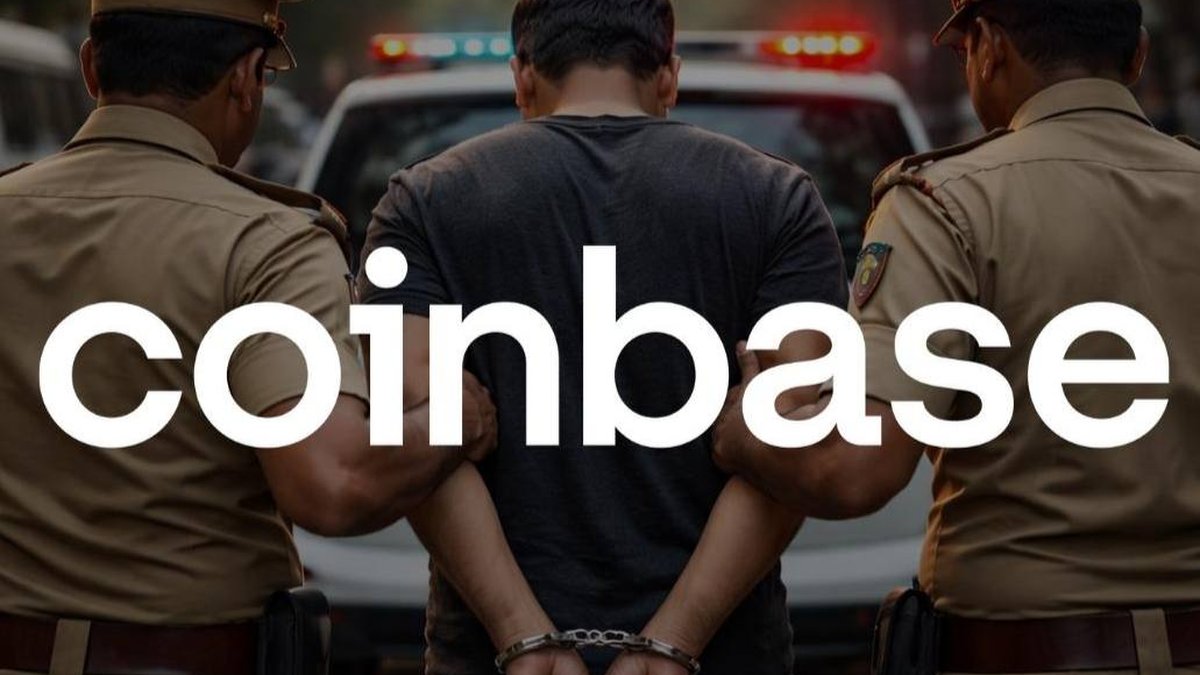
According to Coinbase and law-enforcement updates, an individual who previously worked in customer support at a service centre in Hyderabad, India, has been arrested in connection with a large-scale data leak. The incident affected around 69,461 customers, exposed sensitive personal information, and ultimately led to approximately 307 million USD in costs for remediation and compensation. The company is also facing a shareholder class action arguing that it did not communicate the seriousness of the incident quickly enough.
For users and industry builders alike, this is more than a single company’s problem. It is a textbook example of how insider risk, third-party vendors and incident disclosure all intersect in modern digital finance. This article unpacks what happened, why it matters, and what lessons can be drawn for the broader crypto ecosystem.
1. What Actually Happened? The Anatomy of the Data Leak
The timeline began in late 2024, when criminal groups reportedly started targeting overseas support staff working for major online platforms. Rather than trying to break through technical defences, they pursued a simpler route: bribing customer service agents who already had authorised access to internal systems.
In the Coinbase case, attackers approached support workers at an outsourcing partner and offered payments in exchange for customer information. Over time, at least one employee allegedly supplied data including:
- Full names
- Postal addresses
- Phone numbers
- Copies of identity documents used for know-your-customer (KYC) checks
By May 2025, the company disclosed that nearly 70,000 users had been affected. The malicious actors then attempted classic extortion: they demanded 20 million USD in exchange for not releasing or selling the data. Coinbase refused to pay and instead offered a matching reward for information that would help identify and prosecute those responsible.
An investigation by journalists later suggested the operation was part of a broader campaign that targeted multiple companies through a business-process-outsourcing firm headquartered in Texas with operations in India. The scheme reportedly involved recruiting several employees and using them as a conduit to siphon off customer data from different clients, not just Coinbase.
In December 2025, Coinbase CEO Brian Armstrong confirmed publicly that Indian police had detained a former customer support worker related to the incident. While further legal proceedings are ongoing, the arrest marks an important step: it shows that insider abuse in the crypto sector is firmly on the radar of international law enforcement.
2. Why Insider Risk Is So Dangerous for Crypto Platforms
From a technical standpoint, Coinbase remains one of the more security-focused exchanges. It holds the majority of customer digital assets in cold storage, runs extensive monitoring systems, and invests heavily in infrastructure. Yet none of this prevents a determined insider with legitimate access from misusing that access.
Customer support agents occupy a uniquely sensitive position because their job often requires them to:
- View or verify identity documents and contact details;
- Reset account settings under strict procedures when users lose access;
- Interact with internal dashboards showing account status and activity.
Even when these systems are segmented and audited, a motivated insider can sometimes pull snapshots of data or collaborate with others to bypass safeguards. Crypto platforms face an especially strong incentive to collect detailed KYC data to meet regulatory obligations, which means there is more information for a rogue employee to misuse.
This case shows that security is not just about wallets and ledgers. It is also about how a company manages the human beings who sit between users and infrastructure. Background checks, role-based access, monitoring and whistle-blower channels all matter—but so do culture, incentives and vendor oversight.
3. Outsourcing, TaskUs and the Complexity of Global Support
Another dimension of the story is the role of external service providers. Coinbase, like many technology firms, uses third-party vendors for a portion of its customer support operations. In this case, press reports pointed to a specialised outsourcing company that provides support staff to multiple large platforms.
Outsourcing is attractive because it allows companies to scale support quickly, offer coverage across time zones, and tap into labour markets with lower costs. But it also introduces several layers of risk:
- Indirect control over staff: While the client sets standards, the vendor handles hiring, training and day-to-day supervision. This can create gaps in accountability when something goes wrong.
- Shared environments: Workers may handle requests for several companies from the same office, increasing the potential for cross-company information leaks if procedures are not watertight.
- Cultural and legal distance: Misaligned expectations around privacy, data handling and whistle-blowing can make insider issues harder to detect or report.
The investigation into the Coinbase case suggested that the same criminal network may have attempted to recruit multiple employees across different accounts at the vendor. That turns what might look like an isolated insider incident into a coordinated campaign aimed at the global support industry.
For crypto firms, the message is clear: vendor risk management is now a core security function. It is no longer enough to audit smart contracts and custody systems; companies must also evaluate how partners vet their staff, what monitoring they implement, and how quickly they escalate suspicious behaviour.
4. The Financial and Legal Fallout: 307 Million USD and a Shareholder Lawsuit
Coinbase has disclosed that it recorded approximately 307 million USD in costs linked to the incident in its second-quarter financial statements. That figure covers:
- Technical and operational work to contain and investigate the leak;
- Customer outreach, credit-monitoring support and other remediation steps;
- Compensation or reimbursements for affected users where appropriate;
- Legal and advisory expenses.
This number is notable for two reasons. First, it underlines how expensive data incidents can be even when no digital assets are taken directly. Secondly, it demonstrates to other exchanges that investing proactively in security and data governance may actually be cheaper than dealing with a large-scale failure later on.
The company is also facing a class-action lawsuit from shareholders. The claim essentially argues that Coinbase should have informed investors earlier or more explicitly about the severity of the incident and the potential financial impact. Courts will determine whether those claims have merit, but the case highlights a broader trend: security incidents are no longer just operational matters; they are material events in the eyes of financial markets.
For listed crypto firms, the implications are clear. Incident-response plans must now include not only technical steps and customer communication, but also clear frameworks for when and how to update regulators and investors.
5. What This Means for Users: Data Safety in a Custodial World
For individual users, headlines about data leaks can feel abstract until they hit close to home. In this case, the compromised information reportedly included identity documents for tens of thousands of people. That raises understandable concerns about identity theft and targeted social-engineering attempts.
There are a few key takeaways for users who rely on large custodial platforms:
• Personal data is valuable. Even if no coins were removed from accounts, copies of passports, driving licences and addresses can be misused in other contexts. Treat these documents with the same level of care as your private keys.
• Multi-factor authentication is essential but not sufficient. Strong login protection can prevent unauthorised access to your account, but it does not erase copies of identity documents stored by the platform for compliance reasons.
• Monitor communications carefully. After any major incident, there is a risk of malicious emails or messages impersonating support staff. Users should rely on official channels, verify links and never share codes or passwords with anyone claiming to be from customer service.
• Consider your footprint across platforms. Using the same email and phone number everywhere may be convenient, but it also means a single leak can expose a wide slice of your online life. Where possible, segment identities and use password managers.
None of this shifts responsibility away from platforms; they are the ones trusted with safeguarding user data. But in a world where even well-resourced institutions can suffer incidents, basic digital hygiene is a necessary second line of defence.
6. Lessons for the Industry: From Checklists to Culture
The Coinbase case arrives at a time when regulators are paying closer attention to data protection and operational resilience across financial services. Several themes stand out for the broader crypto sector:
6.1 Insider-threat programmes need to be first-class citizens
Many organisations have sophisticated perimeter defences but treat insider monitoring as an afterthought. Effective programmes typically include:
- Rigorous background checks and ongoing screening for sensitive roles;
- Granular access controls based on the principle of least privilege;
- Comprehensive logging of every access to sensitive data, with anomaly detection;
- Clear, protected channels for colleagues to raise concerns without fear of retaliation.
Crucially, these measures must cover not only in-house staff but also employees of vendors and outsourcing partners. Contractual terms should require equivalent standards and allow independent audits where necessary.
6.2 Data minimisation and tokenisation
The more data a platform stores in plain form, the more attractive a target it becomes. Incorporating data minimisation—collecting only what is strictly needed and retaining it only as long as required—can reduce the impact of future incidents. Techniques such as tokenisation or privacy-preserving verification can limit the exposure of raw identity documents while still meeting regulatory requirements.
6.3 Transparent incident communication as part of trust
Users increasingly judge platforms not by whether incidents happen, but by how those platforms respond. Quick notification, clear guidance, and honest assessment of risks all contribute to long-term trust. Conversely, delayed or vague communication can create reputational damage that outlasts the incident itself.
In parallel, investors and regulators expect timely disclosure of material events. The shareholder lawsuit facing Coinbase—whatever its outcome—will likely shape how other listed crypto firms design their disclosure policies around security and data protection.
7. Beyond Exchanges: A Push Toward New Models of Identity
The incident also feeds into a longer-term conversation about how identity is managed in digital finance. Today, most exchanges hold extensive copies of user documents to comply with regulations. That centralisation of sensitive information inevitably creates attractive targets.
In response, several directions are gaining attention:
• Self-custodied identity credentials: Instead of storing full documents, platforms verify them once and then hold only cryptographic proofs. Users keep the underlying credentials in secure wallets.
• Re-usable, privacy-preserving KYC: Third-party providers perform verification and issue attestations that multiple platforms can rely on, reducing duplication of sensitive data.
• Regulatory dialogue on data retention: Policymakers are starting to recognise that constant replication of identity documents may not be the safest path. More flexible frameworks could allow firms to meet compliance goals while holding less raw personal data.
None of these models will emerge overnight, and they involve their own sets of trade-offs. But high-profile insider incidents strengthen the case for exploring alternatives that put less long-lived personal information in centralised databases.
8. Conclusion: A Reminder That Trust Is Crypto’s Real Infrastructure
The arrest of a former Coinbase support worker in India is, on one level, a story about a criminal group that saw an opportunity and abused a position of trust. On another level, it is a reminder that the true infrastructure of digital finance is not only code and servers, but also governance, incentives and human behaviour.
For Coinbase, the episode has been costly in direct financial terms and in the effort required to reassure users and investors. For the wider industry, it is a case study in why insider-threat management, vendor oversight and transparent incident handling can no longer be optional. As crypto platforms become more tightly integrated with the global financial system, the expectations placed on them will increasingly resemble those applied to traditional banks and payment networks.
For users, the lesson is sobering but empowering: even when assets themselves remain safe, personal data can still be exposed, and it is worth adopting habits—such as strong authentication, cautious communication and diversified online identities—that reduce the impact of such events.
The path toward a mature crypto ecosystem runs through episodes like this one. If companies and regulators draw the right lessons, the result could be platforms that are not only more innovative, but also more resilient, transparent and respectful of user privacy.
Disclaimer: This article is for educational and analytical purposes only and does not constitute legal, financial or investment advice. Digital-asset platforms and online services carry operational and security risks. Readers should conduct their own research and, where appropriate, consult qualified professionals before making decisions related to digital assets or data protection.