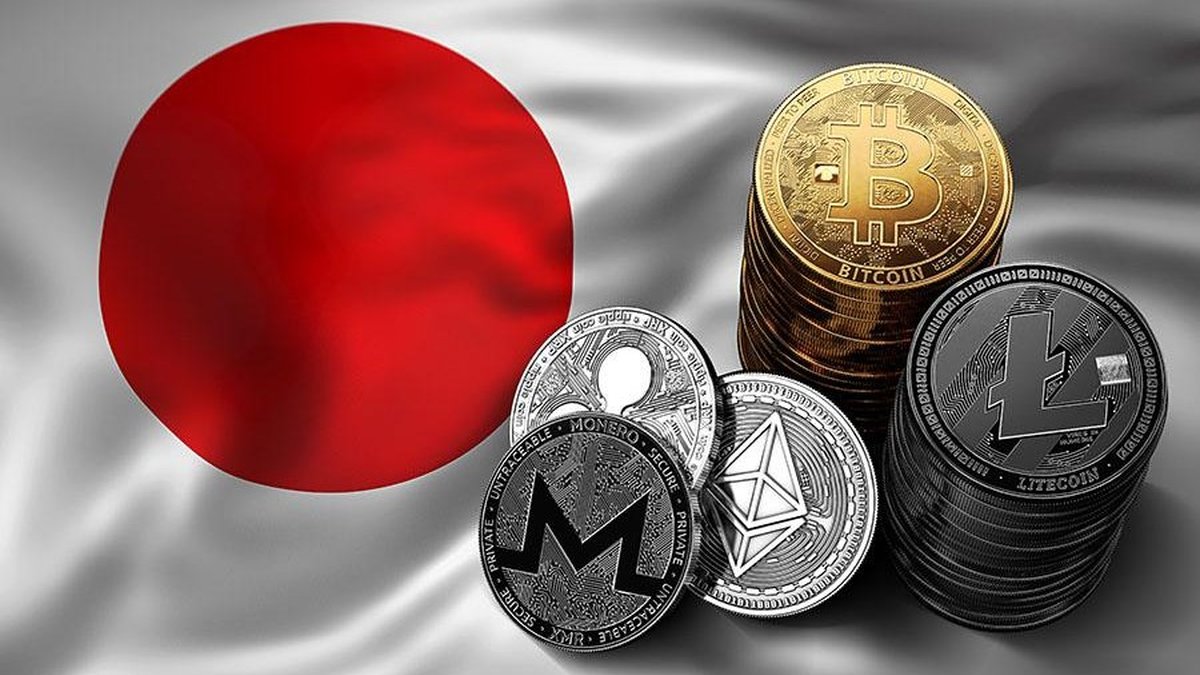
Japan’s “Digital Year” Thesis: Why Bringing Crypto Into Traditional Finance Is Less About Hype—and More About Market Plumbing
When a finance minister speaks positively about crypto, markets often hear a simple message: “bullish.” But policy rarely works like a price candle. It works like a slow reconfiguration of incentives—who is allowed to build, where liquidity is permitted to sit, and what kind of risk can be packaged into a product that ordinary savers can hold without needing to become crypto-native.
That’s why Japan’s reported stance—openly supporting the integration of crypto and digital assets into the traditional financial system and calling 2026 a “digital year”—should be read less as a mood shift and more as a plumbing shift. The center of gravity is not the token. It’s the venue. It’s the infrastructure. It’s the distribution rails.
The key word is “exchanges”: adoption follows the venue, not the narrative
Japan’s finance minister, Satsuki Katayama, reportedly emphasized that securities and commodities exchanges play a crucial role in helping the public access digital assets and blockchain at scale. That detail is easy to gloss over, but it reveals the real thesis: Japan does not want crypto to remain a separate subculture. It wants crypto to become a listed and supervised exposure—something the public can touch through familiar gateways.
In traditional finance, “exchange-listed” status is not just a trading convenience. It is a social technology: it embeds disclosure norms, surveillance expectations, custody standards, and dispute resolution pathways into the asset’s lifecycle. It’s how markets turn wild ideas into investable instruments. When policymakers talk about exchanges, they’re talking about turning experimentation into distribution without losing oversight.
This is the quiet difference between a country that tolerates crypto and a country that wants to incorporate it. Toleration lets innovation exist. Incorporation determines whether innovation becomes infrastructure.
Why Japan keeps referencing the US ETF playbook
Katayama reportedly pointed to the US experience, where crypto ETFs—especially spot Bitcoin ETFs—have been used by investors as tools to hedge inflation. Whether one agrees with the hedge framing or not, the policy implication is clear: ETFs transform crypto from a direct custody decision into a portfolio decision.
That matters in Japan, a country with a large base of household savings and a long-standing cultural preference for stability. Direct crypto ownership demands operational confidence (wallets, keys, security practices). ETF ownership demands something else entirely: trust in a regulated wrapper and a brokerage statement.
The ETF is not merely a product. It’s a translation layer. It translates an unfamiliar asset into familiar compliance language: risk disclosures, daily NAV, authorized participants, custody arrangements, and standardized reporting. In short, ETFs do for digital assets what container shipping did for global trade: they make something complex easier to move through standardized boxes.
Calling 2026 a “digital year” is a promise about the pace of execution
Governments routinely announce initiatives; fewer announce timelines with an implicit expectation of operational delivery. Labeling 2026 the “digital year” signals an intent to coordinate agencies, venues, and industry participants around a common calendar—especially to support exchanges building “advanced-technology” trading environments.
Here’s the deeper point: digital-asset integration is not one policy decision. It’s a sequence. You need definitions (what counts as what), licensing pathways (who can offer what), market surveillance (how manipulation is detected), custody standards (how assets are held), and investor-protection frameworks (what disclosures are required). Each component is dull by itself. Together, they are what make an asset class legible to pension committees, broker-dealer compliance teams, and household investors.
So “digital year” should be interpreted as an attempt to compress that sequence—to reduce the time gap between experimentation and mainstream accessibility.
Japan’s structural advantage: trust and coordination
Japan is not competing on hype. Its advantage is institutional coordination. Countries that move fastest in crypto often rely on permissiveness: fewer rules, quicker launches, more risk. Japan’s model tends to be the opposite: deliberate integration through regulated venues. That can look slower—until you notice what it buys: higher trust, clearer accountability, and a stronger probability that mainstream institutions participate.
Trust is not an abstract virtue in finance; it’s a liquidity engine. When market participants trust venue rules, they commit more capital for longer periods. That has second-order effects: tighter spreads, deeper order books, and more stable risk management. In that environment, “adoption” is less about viral narratives and more about consistent participation.
Japan’s finance-minister framing suggests the country is leaning into that advantage: make digital assets boring enough to be held by people who do not want excitement.
What “integration” actually looks like (beyond slogans)
To integrate crypto into traditional finance, a country needs more than permission. It needs design choices. The most important ones are not about price; they are about boundaries:
• Product boundaries: Which exposures are allowed in mass-market wrappers (ETFs, funds), and which remain restricted to professional investors?
• Venue boundaries: Which venues can list digital assets, and under what surveillance and disclosure standards?
• Custody boundaries: What qualifies as institutional-grade custody, and how are operational risks audited?
• Disclosure boundaries: What must issuers, exchanges, or product providers disclose about risks, liquidity, and conflicts?
The minister’s exchange-centered approach implies that Japan is prioritizing venue boundaries first—because once the venue is credible, product innovation becomes easier to regulate. In many jurisdictions, regulators try to control the asset directly. Japan’s approach appears closer to controlling the market architecture that surrounds the asset.
A hidden strategy: make blockchain adoption “invisible” to end users
The most powerful adoption often happens when users don’t feel like they’re adopting anything. If digital assets become accessible through stock and commodities exchanges, investors may interact with them in the same way they interact with other instruments: through a standard account, under familiar suitability frameworks, with reporting that fits existing tax and compliance processes.
This is how a technology becomes infrastructure: it stops being a separate identity. It becomes an internal layer. Payments users don’t “use the internet”—they use apps. Similarly, future investors may not “use crypto”—they may hold exposures that happen to be powered by blockchain rails.
Japan’s “digital year” framing is consistent with that vision. It’s a bet that blockchain’s most durable win is not cultural. It’s operational.
Implications for markets: not a straight line, but a new baseline
It is important to keep this brand-safe and realistic: no single policy signal guarantees price outcomes. Digital-asset markets are influenced by global liquidity, risk sentiment, and technology cycles. Japan’s posture is not a promise of returns. It is a potential reduction in friction over time.
Reducing friction can matter in three ways:
1) More compliant capital pathways. If mainstream venues can offer supervised products, capital that previously stayed on the sidelines may participate through familiar wrappers.
2) Better risk governance. Exchange-led access tends to bring market surveillance, disclosure norms, and operational controls—improving market quality even if volatility remains.
3) A broader conversation about tokenization. Once traditional venues are comfortable with crypto exposures, adjacent innovations—like tokenized securities or blockchain settlement—become easier to explore within regulated boundaries.
The result is not necessarily a price spike. The result is a new baseline: digital assets treated less like an outsider and more like an asset category that can be packaged, supervised, and distributed.
What to watch next in Japan’s “digital year” storyline
If 2026 is genuinely positioned as a year of digital assets, the most revealing developments will be procedural, not promotional:
• Concrete guidance on listing, surveillance, and disclosure standards for exchange-traded digital asset products.
• Clarity on custody requirements and which entities qualify for institutional-grade safekeeping.
• Whether products are limited to Bitcoin initially (common in institutional sequencing) or broadened over time based on liquidity and operational maturity.
• How Japan frames consumer education—especially risk language—because that determines how widely products can be distributed.
In other words, the story will be told by rulebooks, not speeches.
Conclusion: a “digital year” is a bet on infrastructure, not excitement
Japan’s reported stance is compelling precisely because it is not trying to out-shout the market. It is attempting to do something harder: integrate digital assets into the venues and processes that already govern public trust. If that integration succeeds, the biggest change may be psychological: digital assets stop feeling like a parallel economy and start feeling like a standard toolkit inside modern finance.
That is how asset classes mature—not when everyone agrees they are revolutionary, but when institutions agree they are manageable.
Frequently Asked Questions
Why does Japan emphasize securities and commodities exchanges?
Because exchanges provide supervised access at scale—embedding disclosure norms, market surveillance, and operational controls. This can help digital assets reach a wider public through familiar, regulated venues.
Why are ETFs frequently cited as the bridge for adoption?
ETFs offer a regulated wrapper that fits existing brokerage infrastructure, reporting standards, and compliance processes. For many investors, that reduces operational complexity compared with direct custody.
Does calling 2026 a “digital year” mean prices will rise?
No. It signals policy intent and coordination efforts, which may reduce friction over time. Market prices still depend on broader liquidity conditions and global risk sentiment.
What makes Japan’s approach different from more permissive jurisdictions?
Japan often prioritizes deliberate integration through regulated venues rather than rapid expansion through minimal oversight. That can be slower, but it may produce higher trust and more institutional participation.
Disclaimer: This article is for educational purposes only and does not constitute financial, investment, legal, or tax advice. Digital assets and related products involve risk, including volatility, liquidity constraints under stress, counterparty and custody considerations, and regulatory change. Always assess suitability and consult qualified professionals before making decisions.