Ethereum’s “Trilemma” Moment: Why zkEVM + PeerDAS Feels Like a Breakthrough (and Why It’s Not a Victory Lap)
Ethereum is entering a strangely mature phase: the most important progress is happening in places that don’t always look like progress. Not a flashy new app category. Not a viral “meta.” Instead, a quieter transformation in how the chain proves things, who bears the cost of verifying them, and what “scaling” even means when you refuse to outsource decentralization to a data center.
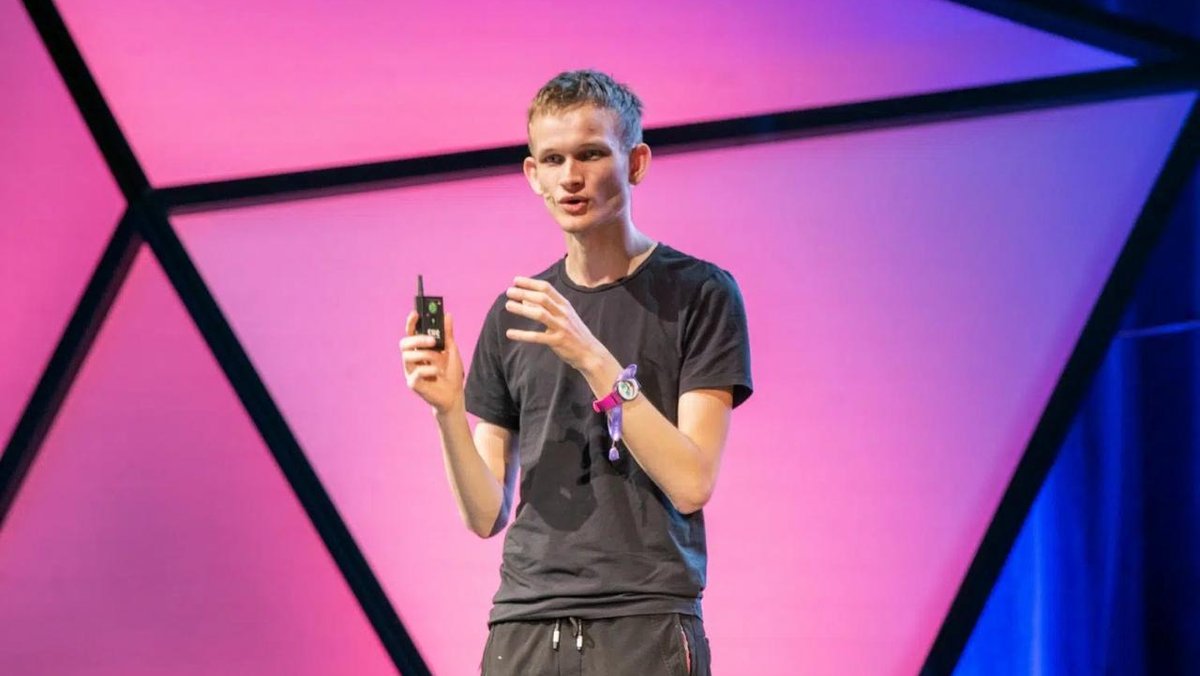
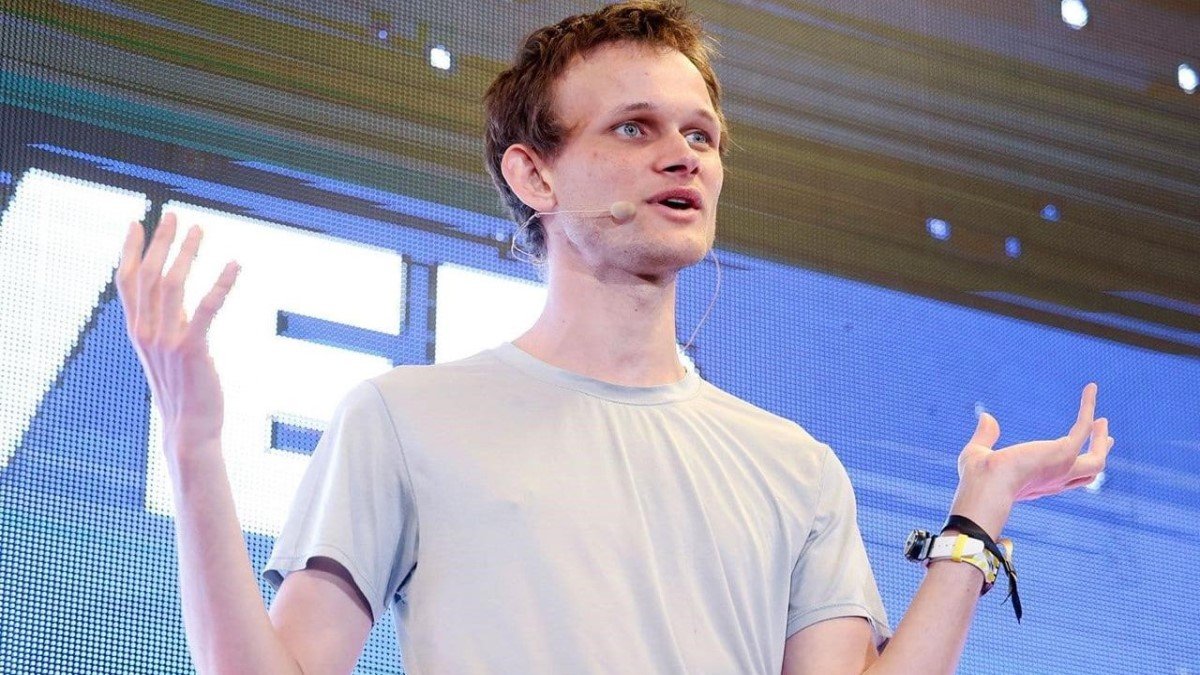
In a New Year message, Vitalik Buterin argued that Ethereum shouldn’t optimize for trend-winning, but for two core outcomes: applications that are genuinely usable at scale, and systems that remain meaningfully decentralized all the way up the stack. In other words, the goal is not a bigger casino—it’s a sturdier internet substrate that survives the “walkaway test,” even if its original builders disappear.
The Trilemma Was Never a Math Problem—It Was a Responsibility Problem
The blockchain “trilemma” is usually told like an iron law: pick two of decentralization, security, and scalability. But Ethereum’s most interesting move over the last few years is that it stopped trying to “pick” and started trying to separate. Separation is a design philosophy that shows up in boring places—interfaces, verification rules, data pipelines—and then changes everything about what’s possible.
Vitalik has previously framed the trilemma debate as misleading when it’s reduced to “our nodes are fast, therefore we solved it.” The real constraint is not whether you can push more transactions through a machine; it’s whether everyday participants can still verify the system without becoming specialists. If the only path to verification is expensive hardware and constant uptime, decentralization doesn’t disappear overnight—it simply becomes gated.
• The practical version of the trilemma is about who can run a node, who can audit the chain, and who gets priced out of self-verification.
• The technical version is about how you prove that data exists (availability) and that computation was correct (execution), without forcing every participant to do every job.
Ethereum’s roadmap increasingly treats the L1 as the world’s most conservative verification engine: it doesn’t need to execute everything, but it must remain the place where everyone can still agree on what happened. That is the mindset behind both PeerDAS and the push toward an L1 zkEVM pathway.
PeerDAS: Scaling Data Without Turning Nodes Into Data Centers
Most people talk about scaling as if it’s only about “more transactions.” In reality, modern Ethereum scaling is largely about data: rollups need cheap, reliable space to publish enough information for users to independently verify what the rollup did. If data availability becomes scarce or too expensive, rollups either stall or quietly centralize around trusted intermediaries.
PeerDAS (Peer Data Availability Sampling) addresses a very specific bottleneck: today, if you increase blob capacity too aggressively, you risk increasing bandwidth requirements for nodes until home operation becomes unrealistic. PeerDAS changes the network’s division of labor: nodes sample pieces of blob data rather than downloading everything, while cryptographic commitments and sampling rules preserve strong probabilistic guarantees of availability.
• What changes conceptually: “everyone downloads everything” becomes “everyone checks enough to be confident it’s all there.”
• What changes operationally: blob data is split into columns and distributed across subnets; regular nodes subscribe to a subset, and the protocol can scale blob throughput without forcing every node to carry the full bandwidth burden.
• Why it matters for decentralization: bandwidth is one of the most fragile knobs; raise it too high and you quietly redefine “validator” as “data-center operator.”
PeerDAS is not just a speed upgrade. It’s a governance statement expressed as networking code: scaling is allowed, but only in ways that keep verification broadly accessible. That’s why it sits at the center of Ethereum’s rollup-centric strategy—because it attempts to expand capacity without compromising the social promise of who gets to participate.
zkEVM: From “Trust Me, I Ran the Code” to “Show Me the Proof”
PeerDAS deals with data. zkEVM deals with computation. And the combination is what makes some observers say Ethereum is “solving” the trilemma: clients can verify correctness without redoing all the work, and they can gain confidence about data availability without downloading everything.
Ethereum Foundation research has been explicit about the direction: ship an L1 zkEVM progressively, starting with optional ZK clients that verify multiple independent proofs off-chain (defense-in-depth via diversity), then move toward a world where proof verification becomes the primary path and re-execution becomes the fallback. The aim is not just to make Ethereum faster; it’s to make Ethereum verification cheaper per unit of scale.
• The performance milestone: the EF has reported dramatic improvements in proving latency and cost over 2025, with zkVMs proving the vast majority of Ethereum blocks quickly on target hardware.
• The security reality check: a proof system is only as good as its soundness. A single soundness flaw isn’t like an isolated bug—it undermines the entire correctness story.
• The roadmap commitment: the EF has laid out milestones targeting 128-bit provable security by the end of 2026, prioritizing formal security arguments and constrained proof sizes to keep proofs practical on Ethereum’s P2P network.
The deeper point is philosophical: zk is not a “feature,” it’s a new social contract between the chain and its users. Instead of asking participants to trust that validators ran the code correctly, the chain can increasingly ask participants to check a succinct proof that the code was run correctly. That shift—if executed carefully—changes what scaling feels like at the edges.
So Did Ethereum “Solve” the Trilemma? Only If You Define “Solved” the Right Way
There’s a version of “solved” that is marketing, and a version that is architecture. The marketing version says: we have high throughput and cheap fees, therefore the trilemma is dead. Vitalik himself has criticized that style of claim as misleading when it’s driven by node optimization alone rather than a fundamentally different verification model.
The architectural version is more nuanced and, frankly, more impressive: you can scale by changing what it means to verify. Data availability sampling changes the cost profile of “checking the chain.” ZK proofs change the cost profile of “checking the computation.” Together, they let a client gain high confidence about correctness and availability without bearing the full resource cost that would normally break decentralization.
• Ethereum’s bet is that the trilemma is not broken by brute force—it’s bent by composable verification.
• The key insight is role separation: not every participant must do every task, as long as the protocol enforces rules that keep dishonest shortcuts from becoming accepted truth.
That’s why the “trilemma solved” headline is less interesting than the underlying question: can Ethereum scale while keeping verification cheap enough that ordinary people can still independently check reality? If the answer trends toward “yes,” the trilemma isn’t defeated—it’s redesigned around new primitives.
The Hidden Costs: Proof-Based Scaling Adds New Failure Modes
Every major design leap trades one set of problems for another. Proof-based scaling is powerful precisely because it compresses complexity into succinct artifacts. But when you compress complexity, you also concentrate risk: the proof system becomes a critical dependency, and the correctness of the chain becomes coupled to cryptographic assumptions, implementation quality, and the health of the proving ecosystem.
This is why the Ethereum Foundation’s emphasis on provable security and formal verification matters. If “security margin is not negotiable,” then shipping faster is not the point; shipping correctly is the point. Ethereum’s challenge is to keep this discipline when the market rewards speed and simplicity of narrative.
• Hardware centralization risk: if proving becomes a specialized arms race, power gravitates toward those who can afford the best rigs and networking.
• Complexity risk: more moving parts can mean more edge cases, more assumptions, and more ways to misunderstand security guarantees.
• Governance risk: when verification becomes abstruse, the “auditor class” shrinks—and the social layer has fewer people capable of catching bad ideas early.
In other words, zk can make verification cheaper for the average participant, while simultaneously making the system harder to mentally model. That’s not a reason to avoid zk—it’s a reason to demand unusually high standards, unusually clear specs, and unusually conservative rollout paths.
Vitalik’s Anti-Trend Message Is Really About Legitimacy
When Vitalik tells the ecosystem not to chase trends, it can sound like an aesthetic preference. But it’s better read as a legitimacy strategy. If Ethereum wants to be the “world computer,” it must be boring in the right ways: reliable, hard to censor, hard to capture, and usable by people who don’t want to learn a new ideology to send a payment or run a small business workflow.
The “walkaway test” is a surprisingly strict standard: can an application keep functioning even if the original team disappears, hosting providers change policies, or popular infrastructure fails? If you take that test seriously, it shifts developer priorities from short-term growth hacks toward durability: open tooling, client diversity, non-custodial UX, and minimized trusted dependencies.
• Trend-chasing optimizes for attention. It produces bursts of adoption that often depend on fragile infrastructure and centralized coordination.
• Mission-chasing optimizes for continuity. It produces slower, steadier adoption driven by integrations that feel invisible—payments, settlement, identity, and on-chain coordination that works even when nobody is cheering.
This is where the “trilemma” framing becomes cultural: Ethereum isn’t just trying to scale throughput. It’s trying to scale trustlessness. That is a harder product than a fast chain—and it’s why the most important upgrades are often the least glamorous.
Conclusion
If you squint, you can see why some people call this a trilemma milestone. PeerDAS expands data capacity without demanding that every node becomes a bandwidth monster. The zkEVM roadmap aims to make verifying computation cheaper and more composable, while treating provable security as a non-negotiable requirement. Together, they point to an Ethereum that scales by changing the economics of verification, not by quietly redefining decentralization.
But the real story is not “Ethereum won.” It’s “Ethereum chose the hard path.” The ecosystem is attempting to become more powerful without becoming more dependent—more scalable without becoming less checkable. If that works, the next chapter of crypto won’t be defined by a new trend. It will be defined by infrastructure that keeps running when trends stop trending.
Frequently Asked Questions
What does it mean to “solve” the blockchain trilemma?
In the strongest sense, it would mean achieving high scalability while preserving robust security and practical decentralization. In Ethereum’s framing, “solving” is less about brute-force throughput and more about verification design: making it possible for ordinary clients to validate correctness and availability without doing all the work themselves.
How does PeerDAS lower fees for users?
PeerDAS increases data availability capacity for rollups by enabling nodes to sample blob data rather than downloading it in full. Over time, more available blob space can reduce the cost rollups pay to publish data, which can translate into lower fees for users—though the degree and speed depend on rollup demand and parameter changes.
Is zkEVM already “on mainnet” as the default execution layer?
Not as a full replacement for today’s execution verification model. The Ethereum Foundation has described a progressive path: optional ZK clients verifying multiple proofs off-chain first, then gradual adoption as security hardens and validator confidence grows. The key progress is that zkVMs are already proving Ethereum blocks quickly, showing feasibility and setting the stage for future protocol changes.
Why is 128-bit provable security emphasized so much?
Because proof soundness is foundational: if an attacker can forge a proof, they can undermine correctness guarantees at the deepest level. The push for 128-bit provable security is about matching widely accepted security margins and ensuring zk-based verification is robust enough for a system securing very large economic value.
What should builders take from Vitalik’s “don’t chase trends” message?
Build for durability and independence: applications that remain usable, resilient, and censorship-resistant without depending on a small set of centralized services. The goal is software that keeps working even when the original team, infrastructure providers, or market narratives change.
Disclaimer: This article is for educational purposes only and does not constitute financial, legal, or investment advice. Cryptoassets are volatile and involve risk. Always do your own research and consider professional guidance where appropriate.