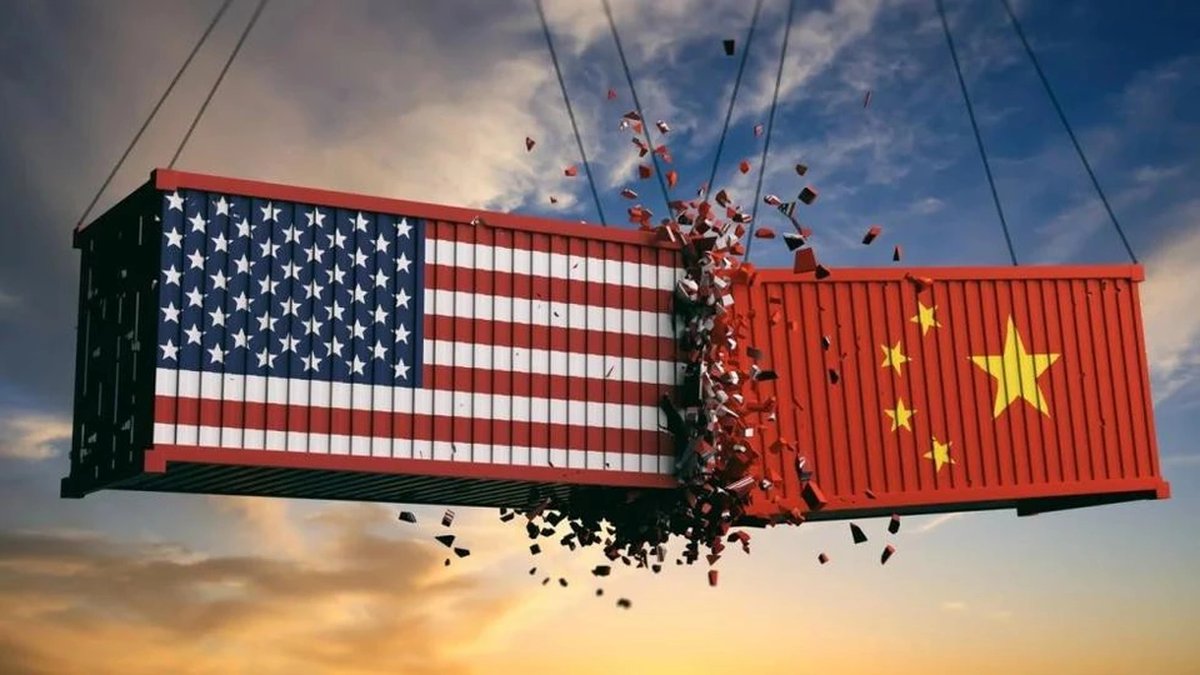
Beijing tightened rare-earth export controls; Washington fired back with a 100% tariff threat and new software export curbs. Stocks sank (Nasdaq −3.6%) and crypto saw record liquidations as fear rippled through supply chains and funding markets
What began as a tariff headline morphed into a full-blown supply-chain scare. China broadened export controls on rare-earth elements and processing materials; hours later the White House threatened an across-the-board 100% tariff on Chinese goods and flagged forthcoming software export controls. Equities recoiled, volatility spiked, and crypto markets endured their biggest leverage purge on record.
From trade spat to systemic supply-chain stress
Beijing’s move to add five rare-earths and related materials to its control list amplified fears for semiconductors, EVs, magnets, and defense supply chains—industries that depend on opaque, concentrated refining steps. The optics echoed 2019’s export-curb playbook, but with broader scope.
Washington’s response raised the stakes: a 100% tariff threat effective November 1 absent progress, plus curbs on exports of critical software (described by officials as including AI-related tools). Taken together, the measures point to an escalation that reaches beyond headline goods flows into the digital stack that powers modern industry.
Markets on edge: records in reverse
U.S. stocks flipped from calm to carnage. The Nasdaq Composite fell 3.6%, the S&P 500 lost 2.7% (its worst day since April), and the Dow slid 1.9%, erasing a chunk of recent gains and puncturing the record-setting tape from earlier in the week. Tech and semis led declines as traders priced tighter supply and slower capex.
Digital assets magnified the stress. Across major venues, about $19B of leveraged positions were liquidated within 24 hours—by several tallies the largest single-day wipeout in crypto history. Bitcoin knifed lower intraday (printing near the low $105K area before stabilizing) while Ether slid into the $3.6K–$3.8K band as cascading margin calls hit thin books.
Why fear escalated so quickly
- Material choke points: Rare-earth refiners and magnet makers sit in tightly controlled chains; incremental controls can ripple into electronics, autos, and aerospace.
- Policy breadth: A blanket 100% tariff threat plus export curbs on software (including AI-adjacent tools) signal pressure on both physical and digital inputs—harder for companies to hedge.
- Leverage & liquidity: Crowded longs near record crypto highs met thinner liquidity as market makers reduced size into the headline—fuel for liquidation loops.
What’s priced in—what isn’t
Equity indices now reflect a fatter risk premium for supply-chain and earnings visibility. Options markets show elevated implied vol around policy dates; funding markets in crypto reset as open interest bled and funding flipped negative. But the scope of software controls and any carve-outs to the tariff list remain unclear—two variables that could swing sentiment sharply in either direction.
Signals to watch next
1. Tariff docket details: Product scope, effective date, and exemptions will determine how much cost truly lands on U.S. supply chains.
2. China’s follow-through: Implementation guidance for the new rare-earth controls (licensing cadence, quota nuance) will tell us if the squeeze is symbolic or binding.
3. Software export rules: Definitions matter; whether “critical software” explicitly captures training frameworks, inference stacks, or EDA tools will shape the hit to AI and chip design pipelines.
4. Cross-asset breadth: If semis, EM FX and credit widen further, crypto beta typically stays capped; stabilization there can green-light mean reversion.
Bottom line
This is no longer a narrow tariff scuffle—it’s a synchronized squeeze on materials and the software that animates them. Markets reacted accordingly: Nasdaq −3.6%, S&P −2.7%, Dow −1.9%, and a record $19B in crypto liquidations. Until we see tariff granularity and export-rule definitions, expect headline-sensitive ranges, wider risk premia, and a premium on balance-sheet resilience.