TON’s New Private Compute Network Debuts as Crypto Enters December in the Red
The first hours of December 2025 delivered a stark contrast. On one side, the market opened with a jolt: Bitcoin dropped from the low $90,000s toward $87,000 and then under $85,800, pulling most major altcoins into the red and dragging total crypto market capitalization back below $3 trillion. More than $140 billion in value evaporated across a handful of hours, accompanied by roughly $200 million in long liquidations.
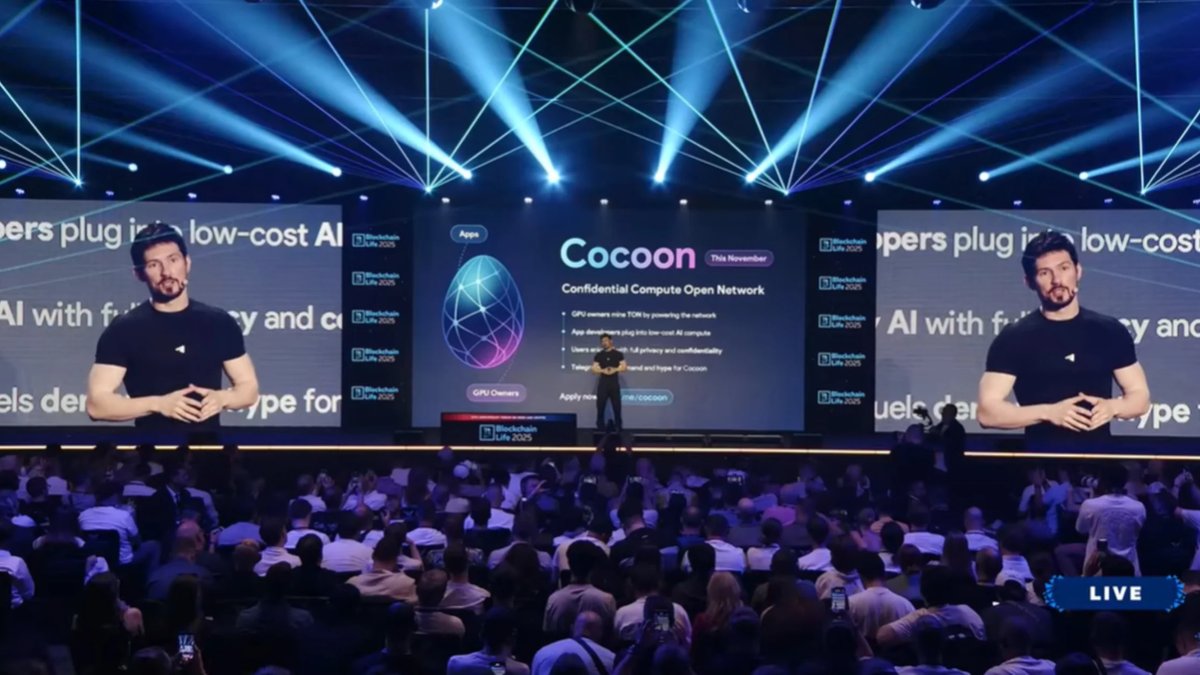
On the other side, the industry continued to build. The TON ecosystem — closely tied to Telegram’s enormous user base — saw the official launch of Cocoon, a decentralized private compute network designed to run on TON. At the same time, Bitcoin exchange-traded products and stablecoins quietly reinforced their role as the structural backbone of the space: BlackRock confirmed that its spot Bitcoin ETF is now a top revenue driver for the firm, while PayPal and Circle shuffled more than $1.5 billion worth of PYUSD and USDC on-chain through mint and burn operations.
This article unpacks the last 24 hours through three lenses: (1) what Cocoon says about the next phase of crypto infrastructure, (2) how the latest Bitcoin slide fits into a maturing ETF- and stablecoin-driven market, and (3) what a series of altcoin and DeFi headlines reveal about risk, governance and investor psychology.
1. Cocoon on TON: private compute inside a messaging-native ecosystem
The headline development on the technology side is Cocoon, a decentralized private compute network deployed on TON. While full technical details will evolve over time, the concept is clear enough: Cocoon aims to provide developers with a way to run privacy-preserving computations anchored to TON, without exposing raw data to every node in the network.
That matters for at least three reasons:
1. Real-world use cases demand selective privacy. Public blockchains excel at transparency and verifiability, but many practical applications — from messaging-related fintech tools to enterprise workflows — need to control what is visible to whom. A private compute layer on TON gives builders more room to design products that can respect user confidentiality while still inheriting security from a base chain.
2. The Telegram–TON connection is unique. Unlike many smart-contract networks, TON sits next to a messaging super-app with hundreds of millions of users. If Cocoon can make it easier to deploy private or semi-private services that integrate with Telegram bots and mini-apps, it could accelerate adoption among non-technical users who never think in terms of wallets or contracts but still benefit from on-chain guarantees.
3. Privacy is shifting from niche to infrastructure. Early conversations around privacy in crypto used to focus on single-purpose assets. The new wave, represented by initiatives like Cocoon, treats privacy as a configurable property of computation and data flow. That approach is more aligned with how regulators and enterprises tend to think: not “everything hidden,” but “the right things visible to the right parties under clear rules.”
Of course, a launch is just the starting line. Cocoon will have to prove itself in production: performance, developer tooling, integration with TON wallets and the broader security model will all be scrutinized. But as a signal, it fits a broader pattern: even during sharp drawdowns, infrastructure for the next phase of adoption continues to ship.
2. Bitcoin opens December with a sharp slide and heavy liquidations
While new networks launch, price remains the most visible heartbeat of the industry — and the last 24 hours were uncomfortable. Bitcoin opened the month near $91,000 and fell under $87,000 before sliding below $85,800, triggering a wave of forced position closures. Approximately $200 million in long positions were liquidated in roughly an hour, a reminder that leverage remains a powerful amplifier in both directions.
The timing is symbolically striking. Eight years ago, Bitcoin first crossed $10,000, a level that then felt almost implausibly high. Today, even after a 17% down month and a rough start to December, the asset trades at a multiple of that, while drawing commentary from every corner of finance and technology:
- Michael Saylor, whose company has become synonymous with a long-horizon Bitcoin allocation, is once again hinting at additional purchases with remarks about adding “green dots.”
- Peter Schiff reiterates his view that Bitcoin is a “fake asset,” arguing from a traditional hard-asset perspective, even as gold pushes to new highs above $4,250.
- Elon Musk frames Bitcoin as a currency anchored in energy, suggesting that “you can’t legislate energy,” and extends his broader thesis that AI and robotics could make traditional work optional within two decades.
Price action, narratives and macro are intersecting in real time. The most important development, however, may be less dramatic than the intraday candles: BlackRock has confirmed that its spot Bitcoin ETF (IBIT) is now the firm’s top revenue driver. For a manager of BlackRock’s size to say that publicly marks a structural turning point.
2.1 Bitcoin ETFs as a structural demand channel
When a flagship spot ETF becomes a leading source of revenue for the world’s largest asset manager, several implications follow:
• Bitcoin has become a core product, not a side experiment. If IBIT is a top contributor, it will command executive attention. That means continued investment in distribution, liquidity and education for institutional clients.
• A new class of buyers is now active. Pension plans, wealth platforms and traditional multi-asset funds that prefer regulated wrappers may opt for ETFs rather than direct holdings. Their flows can be slower and more rules-based than those of retail traders, but they can also be remarkably persistent once an allocation framework is in place.
• Revenue alignment matters. If Bitcoin-linked products are profitable for major financial institutions, those institutions have an economic incentive to support clear, robust regulation and market infrastructure. That can help the ecosystem mature, even if it also introduces new trade-offs.
In that light, the sharp move under $87,000 is better understood as a short- to medium-term episode within a longer process of institutional integration. Volatility remains, but the underlying ownership base is very different from what it was when Bitcoin first crossed $10,000.
3. Stablecoins and cash-like rails: PYUSD and USDC move in size
Another piece of the structural puzzle is stablecoins. Over the last 48 hours, PayPal’s PYUSD and Circle’s USDC have seen more than $1.5 billion in combined mint and burn activity. On-chain, these operations show up as large movements between issuers, treasury addresses and exchanges.
It can be tempting to read every large mint as “new money entering” and every burn as “capital leaving.” In practice, the picture is more nuanced:
- Mints often reflect clients converting bank deposits into tokenized dollars for use on exchanges, in DeFi, or in cross-border payments.
- Burns frequently indicate the reverse: tokens sent back to the issuer for redemption into bank balances, or internal rebalancing between networks.
What matters for the broader story is not each individual transaction but the persistence of large-scale, regulated stablecoin issuers as core infrastructure. When a major payments company and a leading stablecoin issuer are both active at this scale, it reinforces a trend: dollar-linked assets on public networks are evolving into an essential settlement layer for crypto-native and increasingly for fintech applications as well.
4. Altcoins under stress: unlocks, governance and idiosyncratic risk
Beyond Bitcoin and stablecoins, altcoin headlines in the last 24 hours underscore how varied risk profiles can be across the market.
4.1 HYPE unlock: a reminder that token schedules matter
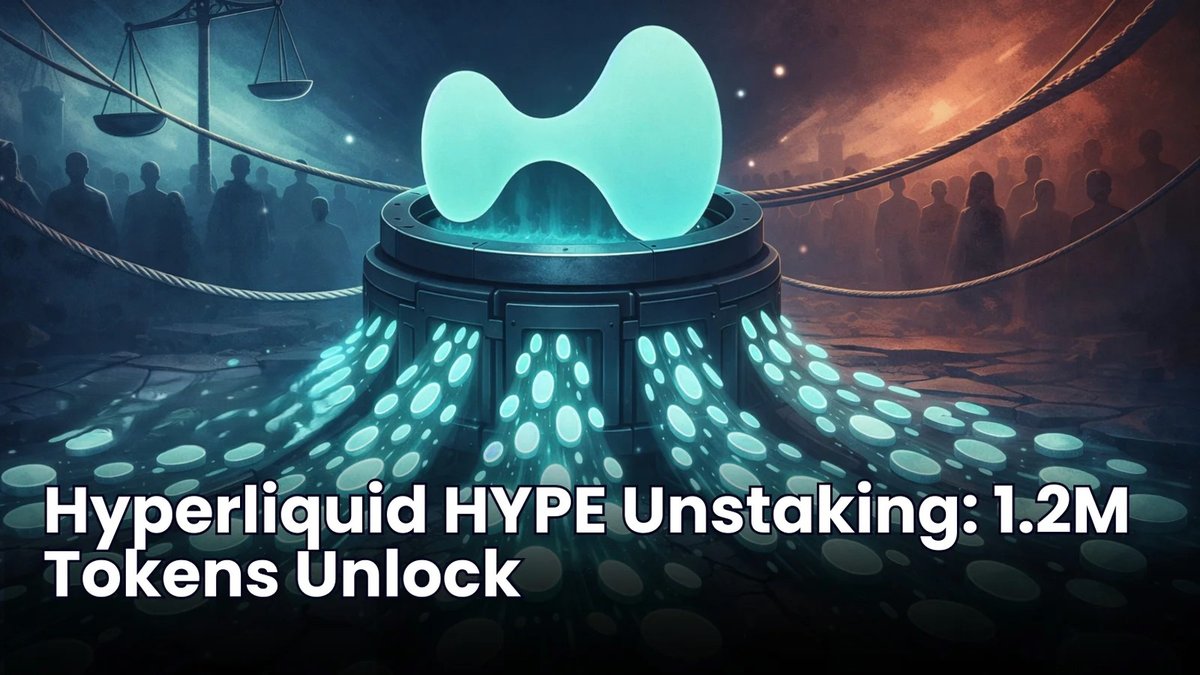
Hyperliquid has confirmed that it will unlock 1.75 million HYPE — roughly $60 million at current pricing — but with an important caveat: the unlock is limited to the development team and core contributors under a previously published vesting schedule. There is no additional unlock for external investors at this stage.
From a governance and alignment perspective, several points stand out:
- Clear communication of who receives unlocked tokens and under what conditions can reduce speculation and prevent misunderstandings.
- Allocations to builders and core contributors are not inherently negative; they can fund continued development and long-term maintenance.
- The market’s reaction will depend on perceived selling pressure, the team’s track record and the broader environment for application-layer tokens.
For observers, the main lesson is straightforward: reading the vesting schedule is as essential as reading the whitepaper.
4.2 CoinShares steps back from multiple US spot ETFs
On the exchange-traded product front, CoinShares has withdrawn its US spot ETF filings for XRP, Solana (SOL) and Litecoin (LTC) just as Nasdaq prepares to host new products. The filings note that no shares were issued and that the relevant transactions were not executed.
While details around internal decision-making remain limited, the move highlights a useful distinction:
- Investor appetite for diversified crypto exposure is real, as evidenced by the success of Bitcoin products and the launch of other Solana vehicles.
- Issuers must weigh regulatory clarity, operational readiness and commercial priorities when deciding which products to advance.
Withdrawal of one set of filings does not necessarily signal a lack of confidence in the underlying networks; it can also reflect a desire to focus resources on markets and structures that are more likely to see rapid approval.
4.3 SAHARA and the importance of narrative risk
Sahara AI is conducting an internal review after its token experienced a price decline of more than 50%. The team has stated that they have not identified security or product failures and are instead looking at market structure, liquidity and communication factors.
Even if technical foundations remain intact, this episode illustrates how narrative risk functions in digital assets:
- Perceptions around token design, unlocks or roadmap changes can trigger sharp moves even in the absence of technical problems.
- Once a steep drawdown occurs, trust is harder to rebuild than code, and teams often need to invest heavily in transparency.
For learners, the takeaway is that price does not always track a simple “good project / bad project” binary; it also reflects expectations, positioning and communication.
4.4 Vitalik, Zcash and the debate over token-based governance
In a separate development, Vitalik Buterin publicly criticized the use of pure token-voting governance for privacy-focused projects, expressing hope that Zcash will continue to resist heavy reliance on token-weighted voting in order to protect long-term privacy goals.
This touches a deeper question: can systems that emphasize privacy over transparency be effectively governed by mechanisms that reward those with the largest token balances? Some in the community worry that such structures could gradually prioritize short-term incentives over robust privacy guarantees.
The broader lesson is that governance design is as much a social and ethical question as a technical one. How a community makes decisions can matter just as much as the cryptography it uses.
5. DeFi risk in focus: the yETH incident
The last 24 hours also delivered a serious reminder about protocol risk. A yETH vault at Yearn Finance experienced a major security incident in which a vulnerability in the minting logic allowed a malicious actor to create a very large amount of yETH and withdraw approximately 1,000 ETH in a single transaction.
Without dwelling on technical minutiae, several educational points are worth highlighting:
• Smart-contract risk never fully disappears. Even well-known projects with long histories and audits can encounter issues when new strategies, upgrades or integrations behave differently under stress.
• Complexity compounds risk. Vaults and structured products that build on multiple underlying protocols must manage not only their own code but also dependencies. A small assumption that fails at one layer can have outsized effects.
• Diversification across strategies and providers remains prudent. Concentrating all funds in a single yield source, however respected, exposes users to idiosyncratic events.
For analysts and sophisticated participants, incidents like this are a prompt to revisit due-diligence checklists: audit history, response procedures, transparency around changes and the ability to pause or mitigate issues quickly all matter.
6. Macro, sentiment and the broader risk backdrop
Finally, a handful of macro and political headlines are shaping how investors frame the current environment:
• White House adviser Kevin Hassett has said he would be willing to serve as Federal Reserve Chair if asked, and is widely discussed as a candidate who favors earlier interest-rate cuts. For markets, a more accommodative Fed leadership profile could imply long-term downward pressure on the US dollar and lower real yields, historically supportive conditions for scarce assets.
• Total crypto market capitalization has once again slipped below $3 trillion, even as gold climbs above $4,250. The parallel advance of gold and the growth of Bitcoin-based products underscores how investors are exploring multiple stores of value in an environment of shifting policy and technology.
Against this backdrop, the divergence in commentary is almost inevitable. Some voices emphasize limits, calling Bitcoin a “fake asset.” Others focus on its energy linkage or its role within an AI- and automation-heavy future. Both views can coexist, and markets tend to move when one narrative dominates positioning for a while and is then challenged by data.
7. How to read this 24-hour window
Bringing everything together, the last 24 hours are not just about a red candle or a single protocol incident. They highlight a set of simultaneous truths:
• Core infrastructure is still advancing. Cocoon’s launch on TON and continued stablecoin operations from PayPal and Circle show that builders and large institutions keep shipping and integrating, even in volatile conditions.
• Bitcoin is both volatile and increasingly institutional. A sharp intraday slide can coexist with the fact that a spot ETF on Bitcoin is now a leading revenue source for BlackRock and that long-horizon entities continue to signal interest.
• Altcoins carry differentiated, often higher, risk. Token unlocks, governance design and communication strategy can matter just as much as technology, especially in thinner markets.
• DeFi requires ongoing vigilance. Smart-contract incidents remain a central risk, making diversification, position sizing and continuous monitoring essential habits rather than optional extras.
For readers using this as an educational reference rather than a trading playbook, the main takeaway is perspective. A single day can contain a major network launch, a sharp market drawdown, important ETF milestones and a serious protocol failure — all at once. Understanding how these pieces interact is more useful than reacting to any one of them in isolation.
Disclaimer: This article is for educational and informational purposes only and does not constitute financial, investment or legal advice. Digital assets are volatile and carry risk, including the potential for total loss. Always conduct your own research and consider consulting a qualified professional before making financial decisions.