
Safe-haven bid sent gold to a record $4,230 while Washington and Beijing traded hard lines. Crypto rotated under the headlines: Coinbase said it will list BNB, Base fees exploded, Solana cooled, and a handful of ecosystem stories moved the tape
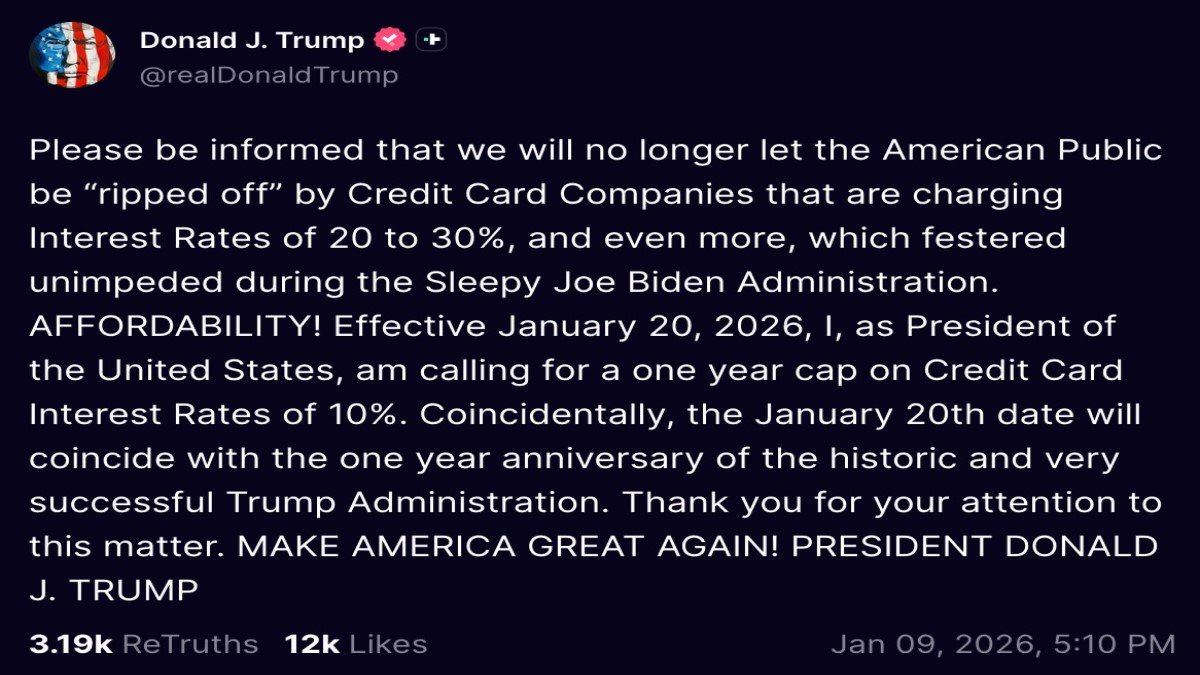
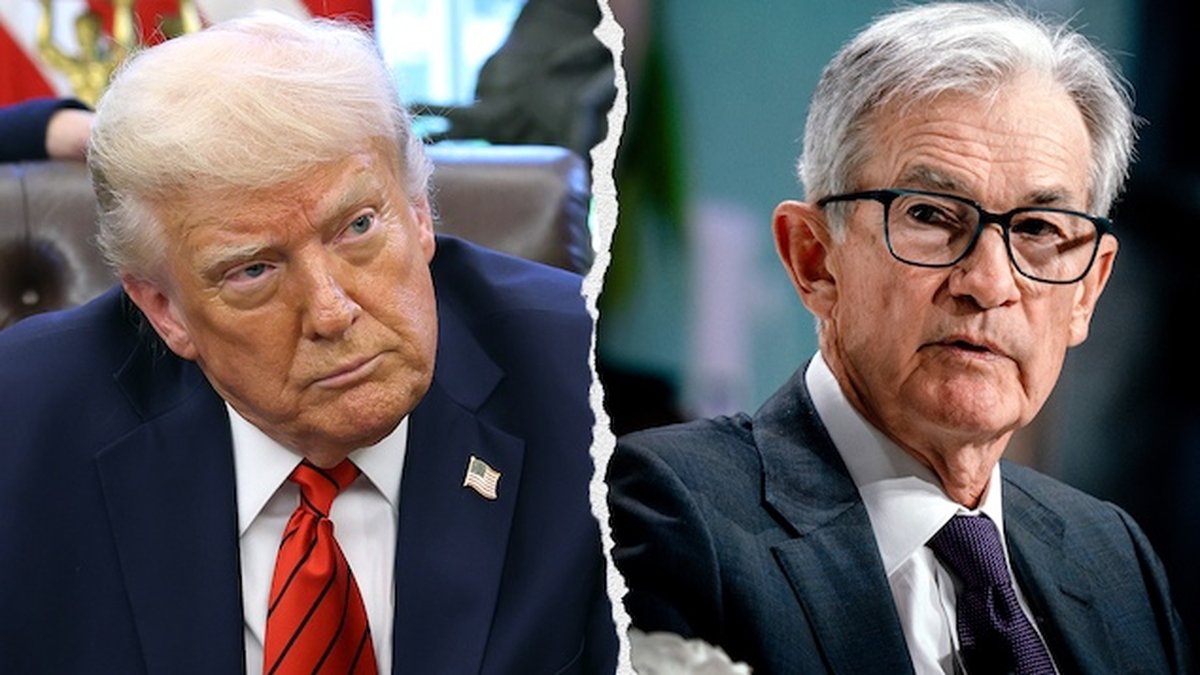
Gold officially marked a new all-time high near $4,230, a textbook safe-haven response as U.S.–China tensions re-accelerated. President Donald Trump bluntly framed the backdrop — “We are in a trade war now” — linking tariffs to national-security aims. In macro terms, that combination (headline risk + supply-chain uncertainty) typically lifts hedges (gold, long duration, select commodities) while pushing risk assets into a two-way, headline-sensitive regime. Crypto’s past day reflected exactly that: cross-currents, rotation, and idiosyncratic catalysts doing most of the work.
Macro lens: what a $4,230 gold print says about the tape
• Risk premia wider, not broken: A record in gold signals persistent demand for protection but doesn’t automatically imply a straight-down path for crypto. Instead, it often means more dispersion: assets with fresh catalysts can rally even as the index chops.
• Liquidity bifurcation: In highly uncertain weeks, capital prefers large, deep venues and assets with clear flows (spot ETFs, top L1s) while smaller caps wait for clarity.
• Policy path is the driver: Markets will fixate on tariff lists, carve-outs, and any signs of de-escalation. Expect sharp, short bursts both ways around those headlines.
24-Hour Crypto Rundown — What Moved and Why
• $BNB: Coinbase to list BNB. A U.S. listing for one of crypto’s largest assets is primarily about distribution and benchmark inclusion: broader retail access, potential index baskets, and new liquidity routes. Near term, watch for elevated on-exchange borrow rates and opening-print volatility.
• $SUI | Typus Finance: Protocol paused after an oracle-driven security vulnerability path was detected; contracts were halted. In the current macro, security vulnerability headlines get oversized price reactions; however, rapid response and patch transparency can truncate drawdowns.
• $ZORA: The creator platform launched the Believe Fund with 20M $ZORA earmarked for emerging artists. Grants that convert lurkers into on-chain publishers are sticky DAU drivers — a medium-term positive for creator-economy liquidity.
• $USDT0 & $XAUT0 on Solana: Tether-linked assets deployed via LayerZero messaging. Interop rails matter: easier asset mobility often precedes TVL migrations and new collateral markets on the receiving chain.
• $RECALL: Coinbase added spot trading for Recall Network. Listing breadth on top venues is one of the few catalysts that still reliably moves mid-caps in a risk-aware market.
• $RWA | World Liberty Financial: Eric Trump said the group plans to tokenize real estate using the USD1 stablecoin. RWA pipelines live or die on issuer quality, custody, and secondary liquidity; monitor those three before extrapolating scale.
• $BASE: Base fees up 317% (≈$767k → $3.2M) as user growth accelerated. Rising fee capture can be a double-edged sword; the bull read is activity + sequencer revenues, the bear read is UX friction if spikes persist.
• $SOL: Solana fees down 34% (~$10M → $6.6M) as the memecoin burst cooled. Cooling can be healthy — it re-sets MEV pressure and improves reliability for serious apps — but it also softens headline momentum.
• $PYUSD: Paxos minted then burned an outsized notional of PYUSD on Ethereum before issuing ~300M. Large test mints/burns can reflect operational moves or decimal quirks; always verify with issuer notices before inferring demand.
• $YGG: Yield Guild Games listed on Upbit in KRW & USDT pairs (reported mkt cap ≈ $90M). Korea listings frequently drive short, sharp liquidity bursts; sustainability depends on cross-venue depth.
• $APT: Aptos × NBCUniversal launched a fan interaction & rewards layer. Media tie-ins convert audiences into wallets—a vital funnel if engagement doesn’t stop at airdrops.
• $EDEN (OpenEden TBILL): S&P Global reportedly assigned an AA+ rating to the TBILL fund vehicle — a signaling win for RWA credibility. Ratings reduce institutional friction; custody and transfer mechanics still matter.
• $YB: Coinbase added futures for YB. Derivatives access enlarges the spec pool but raises liquidation risk during macro spikes — mind your margin.
• Developers: New data place Ethereum as the #1 ecosystem for new developers in 2025. Talent flows tend to lead capital flows with a lag; expect L2s and infra projects to be primary beneficiaries.
• Policy tape: Beyond the trade-war line, Treasury Secretary Bessent flagged an outlook of rising investment, productivity, and jobs. If realized, that narrative tempers hard-landing fears and supports risk over a multi-quarter horizon.
How to position through the noise
• Respect the macro → micro cascade: Policy headlines set the volatility regime; within that regime, venue listings, fee prints, and security vulnerabilities set relative winners and losers.
• Favor deep books on headline days: New listings (e.g., BNB on Coinbase) can whipsaw; let opening ranges establish before sizing.
• Watch ETH/BTC and breadth: A sustained ETH/BTC upturn and expanding breadth would argue for re-risking into alts; otherwise keep beta light.
• Verify before reacting: Large mints/burns or security incident claims can reflect operational events. Check issuer/protocol channels and block explorers.
What to watch next (1–2 weeks)
1. Tariff specifics & responses: Product scope and timing determine how much of today’s fear embeds in earnings and supply chains.
2. Coinbase–BNB listing mechanics: Pairs offered, custody flows, borrow rates, and first-session spreads. A smooth launch adds durability to BNB’s liquidity profile.
3. Sui/Typus post-mortem: Clarity on the oracle vector, patch timeline, and compensation plan will shape ecosystem trust.
4. Base vs. Solana activity: Does Base’s surge persist while Solana stabilizes? Sustained divergence would imply a near-term rotation in L2/L1 flows.
5. Gold follow-through: Another leg up would confirm hedging demand; a quick reversal would hint at headline digestion rather than a new macro regime.
Bottom line
Gold at $4,230 is the macro headline; the crypto story is rotation under uncertainty. A marquee listing for BNB, divergent fee prints on Base and Solana, and a run of ecosystem updates show capital is still active—just more selective. Until the policy path clears, expect a chop-heavy environment where liquidity, verification, and risk sizing are the edge.
Further Reading and Resources
Altcoin Analysis | Exchanges | Apps & Wallets
Note: Items listed above reflect same-day announcements and community reporting; always confirm final parameters with official issuers and venues before trading.