Crypto Sheds ~$125B After Trump Threatens ‘Massive’ China Tariffs — What Happens Next?

2025-10-10

Written by:Avery Grant
Crypto Sheds ~$125B After Trump Threatens ‘Massive’ China Tariffs — What Happens Next?
⚠ Risk Disclaimer: All information provided on FinNews247, including market analysis, data, opinions and reviews, is for informational and educational purposes only and should not be considered financial, investment, legal or tax advice. The crypto and financial markets are highly volatile and you can lose some or all of your capital. Nothing on this site constitutes a recommendation to buy, sell or hold any asset, or to follow any particular strategy. Always conduct your own research and, where appropriate, consult a qualified professional before making investment decisions. FinNews247 and its contributors are not responsible for any losses or actions taken based on the information provided on this website.

Tariff Shock Revives Risk-Off: ~$125B Evaporates From Crypto — What Comes Next?

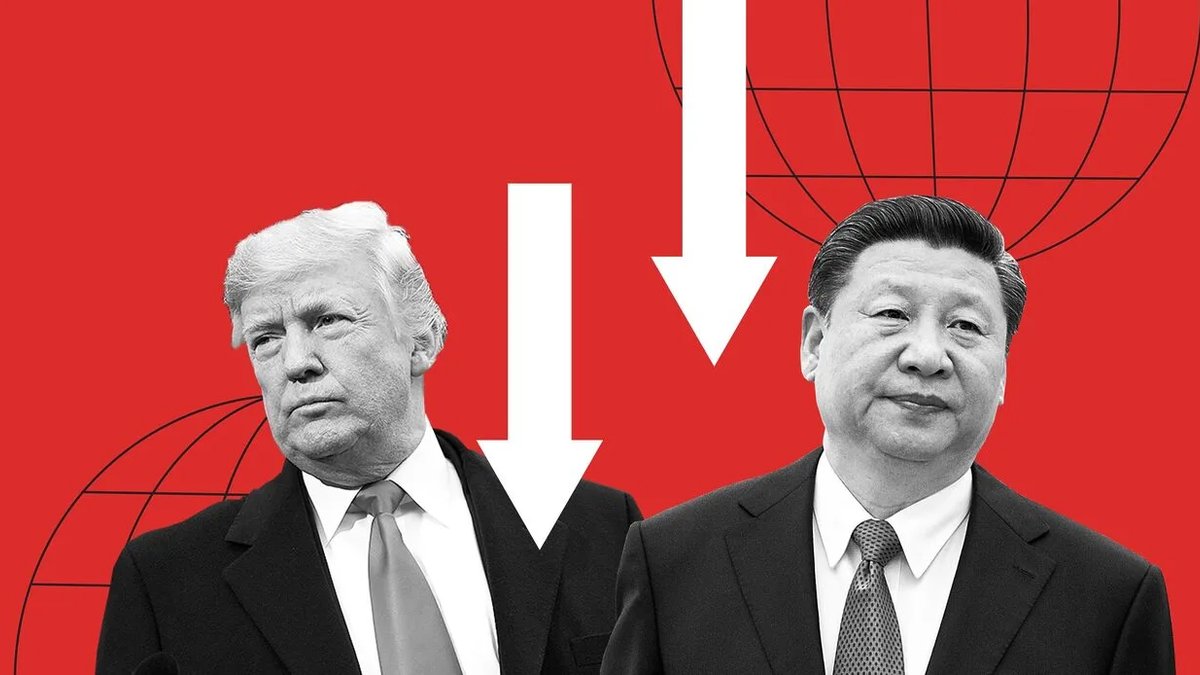
Digital assets tumbled after U.S. President Donald Trump floated a “massive increase” in tariffs on Chinese imports and suggested there was no reason to proceed with a planned meeting with President Xi Jinping. The rhetoric landed alongside renewed frictions over critical mineral exports, and the risk-off impulse spread quickly across equities, FX, and crypto.

Flash risk-off: how we got here

As the headline hit, U.S. stocks turned lower, volatility spiked, and havens bid—classic late-day de-risking. Supply-chain sensitivity (rare earths, semis, industrials) amplified the move and bled into high-beta corners of the market. Crypto, now closely tracked by macro funds, sold off in sympathy rather than on any on-chain fault.

How large was the crypto move?

Within hours, global crypto market capitalization slipped by roughly $125B. Bitcoin lost the $119K level intraday, while Ether slid toward the low $4.1K area. Large-cap altcoins underperformed as liquidity thinned and basis compressed.

Leverage washout

Derivatives venues showed a fast purge of leverage: hundreds of millions of dollars in long positions were force-closed over a 24-hour window. Funding rates flipped negative, open interest reset lower, and the initial leg down invited a cascade of follow-on liquidations as stops clustered around round numbers were triggered.

Why macro headlines hit crypto harder now

Crypto’s correlation to broader risk has risen as institutional participation, ETF flows, and cross-asset macro strategies grow. When policy shocks threaten growth and earnings visibility, the first reaction is to raise cash; beta gets sold, and crypto trades with that tape until clarity returns.

Near-term map: levels and microstructure

For BTC, technicians are eyeing the $115K–$118K zone as a near-term battleground; for ETH, the $4,050–$4,150 pocket has repeatedly attracted dip buyers. Weekends and headline-driven sessions often feature thinner books, so expect outsized wicks and faster moves between liquidity pockets.

Three plausible paths over the next few sessions

  1. Formal escalation: A concrete tariff docket or quick retaliation out of Beijing keeps risk premia high; rallies fade and crypto underperforms until policy details are known.
  2. Quiet de-escalation: Back-channel signals cool the tone with no immediate actions; markets mean-revert and ranges rebuild as funding normalizes.
  3. Chop with mixed headlines: Conflicting messages sustain two-way volatility; watch liquidation prints, open-interest rebuild, and stablecoin flows for early signals.

What to watch

  • Policy tape: Size, scope, and timing of any tariff list; carve-outs matter as much as the headline number.
  • China response: Updates on export licensing (rare earths, strategic inputs) and any incremental restrictions.
  • Cross-asset tells: Equity breadth, semiconductors, EM FX, and the dollar path—persistent stress there typically caps crypto beta.
  • Derivatives health: Funding, basis, and the pace of OI rebuild; another large forced-liquidation wave without macro relief argues for patience.

Bottom line

This was a macro-led shock, not a crypto plumbing failure. A single geopolitical headline erased roughly $125B from digital-asset value and flushed leverage. With positioning partly reset, expect two-way action until the policy path clarifies. Respect the ranges, and distinguish forced flow from conviction flow while the Washington–Beijing tape drives the narrative.
Further Reading and Resources

Altcoin Analysis | Exchanges | Apps & Wallets

More from Crypto & Market

View all
South Korea Re-Opens the Corporate Door to Crypto: Why the Guardrails Matter More Than the Headline

South Korea’s corporate crypto thaw is less about a bullish headline and more about market plumbing: guardrails, custody, compliance, and how a retail-driven venue learns to absorb process-driven capital. The most durable impact will show up in liqui

The 10% Credit Card APR Cap Debate: Consumer Protection, Credit Rationing, and the Hidden Cost of “Affordable” Money

A proposed 10% cap on credit card interest rates frames a classic policy tradeoff: reduce household burden today, or risk shrinking access to unsecured credit—especially for high-risk and low-income borrowers. The real question isn’t whether 20%–30%

When Compliance Becomes an Attack Surface: France’s Crypto Safety Problem Isn’t On-Chain

As crypto integrates into mainstream finance, the biggest risk shifts from private keys to identity databases. France’s recent incidents expose a new kind of vulnerability: compliance itself.

Crypto’s Real 2026 Battleground: Market Plumbing, Not Narratives

The last 24 hours didn’t just move prices—it exposed where crypto’s center of gravity is shifting: from hype cycles to infrastructure, legality, and the plumbing that routes real money.

a16z’s $15B Signal and the New Defense‑Tech Cycle: When Venture Capital Starts Pricing Geopolitics

Andreessen Horowitz’s reported $15B raise isn’t just a big number—it’s a clue about what kind of risk capital wants in 2026: infrastructure, AI capability, and security-adjacent cash flows shaped by policy.

Crypto Is Quietly Becoming a Real Estate Rail in Europe — Not Because Banks Are Bad, but Because Settlement Is Broken

Wealthy buyers are increasingly using crypto to purchase property across Europe via intermediaries like Brighty. The story isn’t “crypto replaces banks”—it’s that crypto offers faster settlement and a new way to prove source-of-funds when traditional