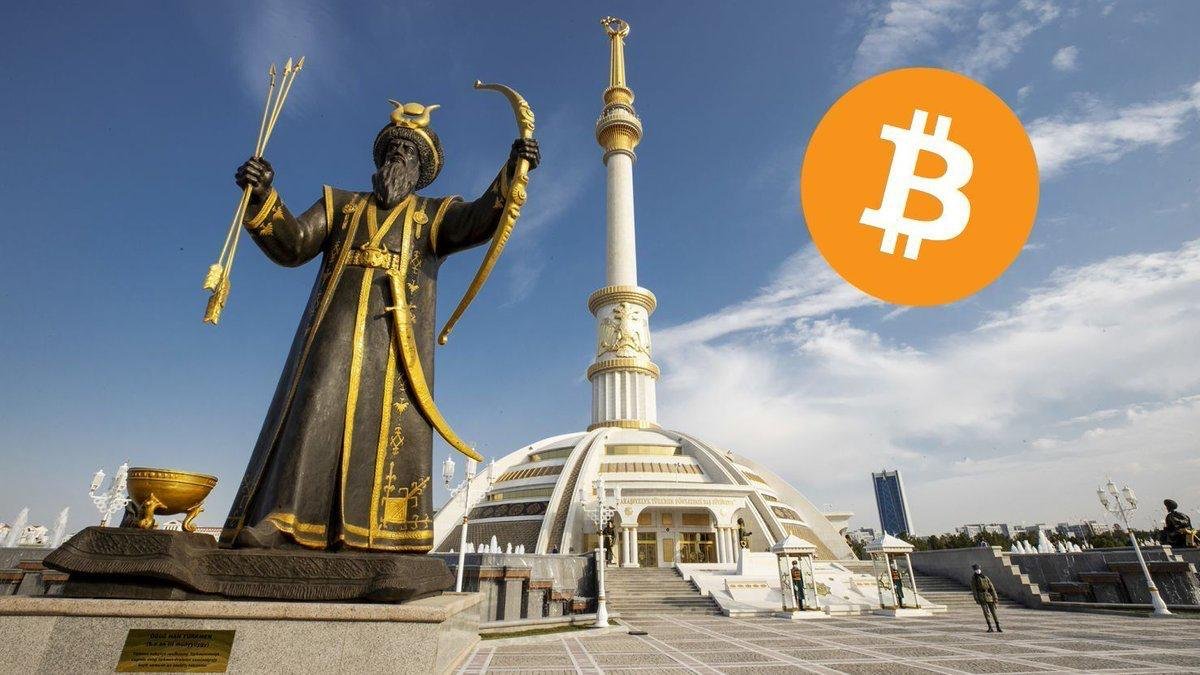
Turkmenistan Legalizes Crypto Mining and Exchanges in 2026: A Controlled Opening Where Licenses Matter More Than Hype
At first glance, Turkmenistan legalizing crypto mining and allowing licensed exchanges from January 2026 reads like a surprise. The country is famously cautious, tightly managed, and not known for experimenting in public. That’s exactly why the headline matters—and also why it’s easy to misunderstand. Legalization here is not a cultural conversion to “crypto ideals.” It’s a state design choice about what kinds of economic activity will be permitted, tracked, and monetized.
If you want to understand this move, ignore the word “legalizes” and focus on the conditions: licensing, supervision, and a clear boundary around payments. Turkmenistan is effectively saying: you can hold and trade digital assets, and you can mine them, but only inside a permissioned perimeter. That perimeter—who gets a license, what they must report, and how they connect to power and banking rails—is the real product.
1) This Is Not a Crypto “Pivot.” It’s a Governance Upgrade
In many countries, crypto regulation is framed as an argument about innovation versus restriction. Turkmenistan’s approach looks different. The new framework pulls digital assets into a legal category and then places them under a centralized oversight model. This isn’t deregulation; it’s codification. The government is taking an activity that can already exist informally and deciding it would rather see it in daylight—under rules it can enforce.
That distinction matters because “legalization” can mean two opposite things. In an open-market context it can imply broader access and competition. In a controlled-economy context it can mean the opposite: the state is clarifying the law so it can select participants, standardize compliance, and reduce gray-zone behavior. If the only actors who can operate are licensed, then legality becomes a filter, not a free-for-all.
To make that tangible, think of the law as a new set of gatekeeping levers:
• Licensing as permission: the state decides who is allowed to run an exchange or mine at scale, and on what terms.
• Supervision as visibility: reporting and oversight convert a hard-to-measure sector into a legible one.
• Enforcement as deterrence: unregistered activity isn’t “competition,” it becomes a compliance breach.
The bottom line: this is an attempt to turn crypto into a regulated industry segment—more like telecom or banking than like an open-source hobby.
2) Why Turkmenistan Is Doing This Now: Energy, Investment, and a Need for New Lanes
Turkmenistan’s economy is heavily tied to natural gas exports. That dependency creates a strategic vulnerability: when one export lane dominates, the country’s economic optionality narrows. Introducing a regulated crypto sector is one way to create a new lane—one that doesn’t replace gas, but can complement the broader “digitalization” agenda while signaling modernity to certain types of investors.
Crypto mining, in particular, is never just about software. It’s about power markets and infrastructure. In energy-rich countries, mining can be framed as a way to monetize electricity that is cheap, underutilized, or difficult to export. But governments don’t want that monetization to happen in a chaotic way. They want it to happen through contracts, controlled connections, and tax visibility. A licensing regime is the policy mechanism that tries to make that possible.
Here are the practical motivations that fit the policy design (without requiring hype):
• Attract “formal” capital: rules and licenses can invite compliant operators who won’t build in the shadows.
• Create taxable economic activity: licensing helps convert informal profits into measurable, taxable flows.
• Control power demand: mining is industrial load; the state wants to decide where it can plug in and how big it can get.
• Signal modernization: a legal framework can be positioned as part of a broader digital economy narrative.
None of these motivations are unique to Turkmenistan. What’s unique is the setting: a country that historically keeps tight control is experimenting with a sector that, by nature, tries to route around control. The policy solution is predictable: don’t fight the technology at the protocol layer—control it at the licensing layer.
3) The Payment Ban Is the Tell: “You May Hold It, But You May Not Replace Money”
The most revealing feature of Turkmenistan’s framework is what it doesn’t allow: using crypto as a means of payment. This is where the state draws a bright line. It’s comfortable treating digital assets as objects you can create, hold, trade, and profit from—under supervision. It is not comfortable letting them become everyday currency substitutes that could weaken monetary sovereignty or complicate policy control.
This separation—tradable asset versus payment instrument—is a pattern across many jurisdictions, but it becomes especially important in tightly managed economies. Allowing payments expands crypto from an investment niche into a parallel transaction network. That shift changes the political and monetary calculus dramatically. By banning crypto payments while legalizing licensed trading, Turkmenistan is choosing a controlled financial-market model, not a societal-currency model.
What that boundary accomplishes in practice:
• Protects the role of the national currency in domestic commerce.
• Limits consumer exposure to “pay-with-crypto” volatility in daily transactions.
• Concentrates oversight around a smaller number of licensed venues rather than millions of merchants.
In short: the government is allowing an asset class, not endorsing a new money system.
4) Licensing Turns “Open Crypto” Into “Permissioned Crypto”—and That’s the Point
Crypto markets can be messy when they operate entirely in the shadows: fraud risk rises, consumer disputes are hard to resolve, and state institutions can’t measure systemic exposure. But licensing doesn’t just solve those problems—it also creates a power structure. Whoever controls the license controls the market’s shape: how many exchanges exist, who may custody assets, what user identification is required, and which behaviors are prohibited.
This is why the central bank’s supervisory role is not a footnote. It suggests the country wants crypto to resemble a regulated financial sector with defined intermediaries, rather than a dispersed ecosystem. In that model, the central question becomes: will licensing produce a credible, operationally stable market—or will it produce a narrow, high-friction market that exists mainly on paper? The outcome depends on the quality of implementation, not on the text of the law alone.
To evaluate the regime as it rolls out, watch for these “implementation tells”:
• License accessibility: are there clear criteria and timelines, or is permission opaque?
• Operational standards: how are custody, security, disclosures, and market integrity handled?
• Banking interfaces: can licensed entities connect to fiat rails responsibly and transparently?
• Enforcement clarity: is unlicensed activity policed consistently, or selectively?
Legalization is only meaningful if legitimate operators can actually operate—and if users can access the market safely without turning every interaction into a compliance maze.
5) What Success Looks Like: Measurable Outcomes, Not Viral Narratives
It’s tempting to judge a country’s crypto policy by how loudly it trends online. That’s a poor metric. A more useful approach is to define what “policy success” would mean from the state’s perspective and from a user-protection perspective. If Turkmenistan’s stated goals include attracting investment and diversifying beyond gas, then the relevant outcomes are concrete: licensed businesses operating transparently, stable infrastructure, and incremental growth in legitimate digital-sector activity.
At the same time, success must include stability. Mining can stress power systems if it scales without coordination, and exchanges can create consumer harm if standards are weak. A controlled opening is only credible if it can handle both growth and stress without swinging into abrupt reversals. The most durable regimes are the ones that can say “yes, but” with consistent rules.
Here’s a simple scoreboard that avoids hype:
• Licensing uptake: how many miners and exchanges become licensed, and how quickly?
• Grid stability metrics: are there fewer outages and less load volatility in mining-heavy regions?
• Consumer safeguards: do licensed venues show clear disclosures, complaint processes, and security posture?
• Investment signals: do credible operators build infrastructure, hire locally, and commit long-term?
These indicators won’t trend on social media. But they’re exactly what determine whether the policy becomes a sustainable sector or a short-lived experiment.
Conclusion
Turkmenistan’s 2026 crypto framework is best understood as a controlled opening built around licensing. It permits mining and exchange operations, but only for approved entities; it recognizes holding and trading, but blocks the step that would matter most for monetary sovereignty—payments. That combination reveals the intent: build a supervised digital-asset industry that can attract investment and support diversification goals without surrendering control over currency and infrastructure.
For observers, the key lesson is to separate the headline from the mechanism. The mechanism is not Bitcoin, mining rigs, or exchange brands. The mechanism is permission. In 2026, Turkmenistan isn’t “joining crypto” as a culture; it’s experimenting with crypto as an industry—one that must fit inside a state-managed economic model.
Frequently Asked Questions
Does this mean crypto becomes legal tender in Turkmenistan?
No. The framework described by major reporting explicitly does not recognize cryptocurrencies as legal tender or a means of payment. The law focuses on regulated creation, storage, and circulation under oversight, while keeping payment functions off-limits.
Who can mine or run an exchange under the new rules?
Licensed entities. The policy design emphasizes permissioned operation—mining and exchange services must be registered and supervised through the state’s regulatory architecture rather than operating informally.
Why would a gas-dependent country care about crypto mining?
Mining is ultimately an energy-to-digital-value conversion business. For energy-rich countries, it can be framed as a way to monetize power and attract digital-sector investment—if it’s managed carefully to avoid grid stress and governance problems.
What should readers watch in 2026 to see if this policy “works”?
Look at implementation: transparent licensing criteria, operational standards for exchanges and custody, evidence of grid management for mining load, and whether credible operators can function sustainably within the regime.