Bitmain’s Fire Sale and the Mining Winter of 2025: Stress Test for Bitcoin’s Security Layer
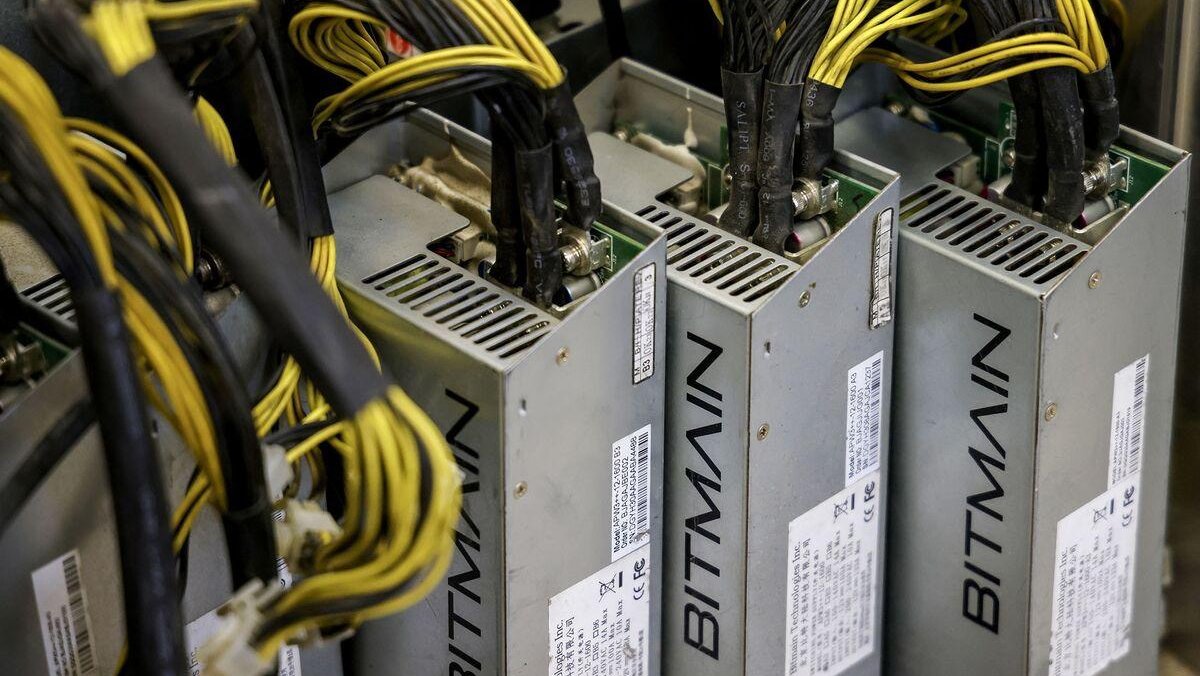
At the end of 2025, the Bitcoin mining industry looks very different from the exuberant cycle peaks that most people remember. Instead of miners rushing to secure new machines at any price, we are seeing the opposite: hardware is cheap, margins are thin, and even the largest players are under pressure. The most visible symbol of this shift is Bitmain, the world’s biggest producer of ASIC mining rigs, launching deep discounts across much of its product line.
From widely used S19 units to the newer S21 series and even high-end liquid-cooled systems, Bitmain has rolled out promotions, bundle deals, and price reductions that would have been unthinkable during the previous bull cycle. In some cases, industry sources report that buyers are allowed to negotiate unusually aggressive terms, effectively “naming their price” for bulk orders.
At first glance, cheaper mining machines may sound like good news for anyone looking to enter the space. But the underlying reason for the discounts is less cheerful: mining profitability—often measured by hashprice—has fallen to levels close to or even below the average cost of production. Many operators now face a harsh reality: the more they mine, the more money they lose.
This article explores how we arrived at this point, why 2025 has been so punishing for miners, and what Bitmain’s pricing strategy reveals about the broader state of the Bitcoin network.
1. What Bitmain’s ASIC Discounts Are Really Telling Us
Bitmain has usually had the upper hand in previous cycles. During periods of strong miner demand, the company could sell out batches of new ASICs months in advance, charge premium prices, and prioritise shipments to the highest bidders. Hardware scarcity was part of the story that helped push hashrate and difficulty to new highs.
Late 2025 flips that script. The market is now saturated with several generations of machines, from Antminer S19 units still running in many facilities to the more efficient S21 and liquid-cooled variants. When electricity is cheap and Bitcoin’s price is strong, almost all of those models can operate profitably. But when revenues fall and energy costs remain high, older rigs quickly become uneconomical.
Bitmain’s response has been to:
- Offer large discounts on S19 series rigs, making them attractive only to operators with extremely low power costs or creative energy arrangements.
- Provide bundle deals for S21 and immersion-cooling setups, hoping to move inventory and keep the production pipeline running even as miners cut or delay expansion plans.
- Experiment with flexible pricing and financing structures, including pay-over-time or revenue-sharing arrangements for select customers.
The key point is that hardware prices are not falling in isolation. They are a direct reflection of miners’ shrinking ability to turn electricity and ASIC capacity into revenue. To understand that dynamic, we need to look at the economics of mining itself.
2. Hashprice Under Pressure: How Mining Revenues Collapsed
Mining profitability is often summarised by a simple metric known as hashprice: the amount of revenue (in USD or BTC) that miners earn per unit of computing power per day. Hashprice depends on several variables:
- Bitcoin’s price in fiat terms.
- Network difficulty and hashrate, which determine how hard it is to find a block.
- Block rewards (subsidy plus transaction fees).
In 2024, the Bitcoin protocol went through another halving, reducing the block subsidy paid to miners. Historically, halvings have often been followed by strong price appreciation, which eventually more than compensates miners for the lower reward per block. This time, the adjustment has been slower and rougher.
By late 2025, the industry faces a painful combination:
- The block subsidy has already been cut, locking in lower BTC-denominated rewards.
- Network hashrate remains high because many industrial-scale miners continued to expand during the previous uptrend and are reluctant to shut down capacity they financed at significant cost.
- Transaction fees have normalised after several earlier spikes tied to new use cases on the network. Fees still contribute to miner revenue but are not consistently high enough to offset the reduced subsidy.
The result is that hashprice has dropped toward multi-year lows, pushing many operations toward or below their break-even point. For miners paying standard industrial electricity rates and hosting fees, every hash added to the network yields less revenue than it costs to operate. Only those with very cheap power—such as access to stranded energy, hydro surplus, or favourable long-term contracts—can remain clearly profitable.
3. Why 2025 Was Unusually Harsh for Miners
To say 2025 has been a tough year for Bitcoin mining is not just a reaction to short-term charts. Several structural pressures converged at the same time:
3.1 The delayed impact of the halving
Many miners planned for the 2024 halving under the assumption that higher prices would arrive quickly afterward, as seen in previous cycles. This expectation encouraged some operators to continue expanding capacity into early 2025. When the expected price surge slowed or arrived later than anticipated, those same operators found themselves servicing debt and power contracts with lower-than-expected revenue.
3.2 Elevated energy and financing costs
Electricity markets in multiple regions experienced volatility in 2025, driven by weather patterns, changes in fuel prices, and grid constraints. At the same time, interest rates remained relatively high compared to earlier years, increasing the cost of capital for miners who borrowed to buy hardware or build facilities. Together, these factors amplified the impact of weak hashprice.
3.3 Hardware competition and rapid obsolescence
New ASIC generations are becoming more efficient at a faster pace. When a new model offers substantially better performance per watt, older machines can quickly transition from “barely profitable” to “uneconomical.” In 2025, this meant that some fleets of S17 and early S19 units were switched off or sold for parts. Even S21-class rigs, while efficient, could not fully escape the gravity of falling revenues.
3.4 Regulatory and grid considerations
In several jurisdictions, regulators paid closer attention to large-scale mining, especially where operations draw on stressed grids. This did not always mean outright restrictions, but it did contribute to uncertainty around long-term planning. Some miners were hesitant to invest in new sites or upgrades without more stable policy signals, further weakening demand for hardware.
All of these elements feed back into Bitmain’s situation: if miners are not expanding aggressively, hardware manufacturers must adjust expectations—and prices.
4. How Miners Are Responding: Consolidation, Innovation and Strategic Pauses
Faced with squeezed margins, miners are not standing still. Across the industry, several strategies are emerging:
• Selective shutdowns: Many operators are temporarily powering down their least efficient machines, focusing instead on newer rigs that offer better performance per watt. This helps reduce losses while still maintaining a presence on the network.
• Geographical optimisation: Some miners are relocating equipment to regions with lower energy costs or more favourable grid conditions, though this often involves logistical challenges and capital expenditure.
• Financial hedging: Larger firms increasingly use derivative markets to lock in revenue or protect against further price declines, aiming to smooth out cash flows over time.
• Mergers and acquisitions: Smaller or highly leveraged operators, unable to sustain operations at current margins, may sell assets or entire facilities to better-capitalised players. This contributes to industry consolidation, with a growing share of hashrate controlled by fewer entities.
In this environment, Bitmain’s discounted machines act as both an opportunity and a test. Efficient miners with strong balance sheets can take advantage of lower hardware prices to prepare for the next cycle. Weaker players, however, may not be able to justify new capital spending at all.
5. Short-Term Pain, Long-Term Opportunity?
Historically, some of the most attractive moments to invest in mining infrastructure have appeared during periods of pessimism—when hardware is cheap, sentiment is weak, and many participants are exiting the market. The current environment shares several of those features.
From a long-term perspective, there are two sides to this story:
5.1 The opportunity: lower entry cost and cleaner competition
For miners with access to low-cost energy and disciplined financial management, the downturn can be a chance to accumulate hashrate at discounted prices. Buying ASICs during a downturn and deploying them when market conditions improve has historically been a successful strategy for well-positioned firms. In that sense, Bitmain’s discounts are providing a rare window for strategic expansion.
Moreover, as less efficient or over-leveraged operators capitulate, the remaining miners face less competition for future block rewards. When Bitcoin’s price eventually strengthens or transaction fees increase, these survivors can capture outsized benefits.
5.2 The risk: increasing centralisation of mining power
The downside is that extended periods of stress can accelerate consolidation. Large, well-funded entities may acquire distressed assets or simply outlast smaller competitors. While this can improve capital efficiency, it also concentrates hashrate in fewer hands, raising questions about decentralisation and resilience.
Bitcoin’s consensus design makes it difficult for any single miner to unilaterally control the network, but a more concentrated mining landscape can still influence governance discussions, fee policies, and responses to protocol changes. For observers who value a wide distribution of mining power across independent operators, the current winter is a reminder that economics and decentralisation are tightly linked.
6. What the Mining Squeeze Means for Bitcoin Itself
Beyond the fortunes of individual companies, the mining downturn raises broader questions about Bitcoin’s long-term security model. Miners are compensated through a combination of the block subsidy and transaction fees. As halvings continue over the decades, the subsidy becomes smaller, and the network must rely more heavily on fees and efficient operations to maintain a robust security budget.
Periods like late 2025 show how sensitive miners can be to changes in revenue and cost. However, two stabilising mechanisms are worth remembering:
- Difficulty adjustment: If enough miners shut down, network difficulty decreases, raising the expected revenue for those who remain online. This built-in feedback loop helps prevent a long-term spiral of decreasing security.
- Market dynamics of fees: If block space becomes scarce—for example, due to increased on-chain activity—transaction fees can rise and partially offset lower subsidy, improving miner income.
In other words, while the current environment is painful for many individual operators, the protocol itself is designed to adapt. The more important question is not whether the network can survive 2025—it can—but how the composition of the mining sector will look when the next cycle unfolds.
7. Lessons for Observers and Participants
For readers who do not run mining operations, the story of Bitmain’s discounts and the 2025 mining winter still offers several useful lessons:
• Mining is an industrial business, not a simple “plug and earn” activity. Profitability depends on power contracts, hardware efficiency, financing, and market timing. Headlines about quick returns rarely capture the full complexity.
• Periods of stress often reveal the underlying health of an ecosystem. Today’s environment is exposing which miners have robust risk management and which relied on favourable conditions continuing indefinitely.
• Network resilience is a combination of code and economics. Bitcoin’s protocol rules provide the framework, but real-world miners still need sustainable incentives. Monitoring hashprice, difficulty, and hardware trends is therefore essential for understanding long-term security.
For anyone considering involvement in mining—whether through hosting, purchasing equipment, or investing in related companies—2025 serves as a reminder to stress-test assumptions. What happens if Bitcoin’s price moves sideways for longer than expected? How sensitive is a business model to small changes in energy cost? What margin of safety exists if hardware resale values fall further?
8. Conclusion: A Winter That Will Shape the Next Cycle
Bitmain’s decision to sharply reduce ASIC prices at the end of 2025 is not just a marketing campaign. It is a visible symptom of a deeper adjustment taking place across the Bitcoin mining ecosystem. Hashprice has fallen toward historic lows, many operators are re-evaluating their strategies, and the industry is undergoing a phase of consolidation and restructuring.
For the Bitcoin network, this is both a challenge and an opportunity. On one hand, sustained pressure on miners can lead to a more concentrated landscape, raising important questions about decentralisation and geographic diversity. On the other hand, cheaper hardware and more disciplined operators can position the industry for a healthier, more sustainable next cycle.
As 2025 draws to a close, one message stands out: mining is the heartbeat of Bitcoin’s security layer, and its health cannot be taken for granted. Monitoring miner profitability, hardware trends, and energy dynamics is not only relevant for industry insiders; it is essential context for anyone who cares about the long-term resilience of the network.
Disclaimer: This article is for educational and analytical purposes only. It does not constitute financial, investment, or legal advice. Bitcoin mining and digital-asset markets involve significant risks and may not be suitable for all investors. Always conduct your own research and consider consulting with a qualified professional before making any financial decisions.