Fidelity Crypto vs Kraken Fees: A Comprehensive Analysis
The cryptocurrency landscape has evolved rapidly over the past decade, transforming from a niche market into a global financial frontier. For investors, understanding the differences in fee structures between major platforms is crucial for optimizing returns. Fidelity Crypto and Kraken represent two distinct approaches to cryptocurrency trading, each with unique strengths, weaknesses, and target audiences.
Understanding Fidelity Crypto
Fidelity Crypto is an extension of Fidelity Investments, one of the world’s largest financial services firms, into the cryptocurrency domain. The platform is designed for both retail and institutional investors who prioritize security, regulatory compliance, and integration with traditional brokerage services.
Key features include:
- Regulated Environment: Fidelity operates under stringent regulatory standards, ensuring investor protection and compliance with U.S. securities laws.
- Custody Solutions: Multi-layer security protocols, cold storage, and insurance coverage protect assets against theft and cyber threats.
- Research and Analytics: Fidelity provides market insights, analytical tools, and educational content for informed decision-making.
- Integration with Retirement Accounts: Investors can gain crypto exposure through 401(k)s and IRAs, a feature rarely offered by other exchanges.
The platform emphasizes long-term investment strategies and mitigates risks associated with self-custody, making it ideal for conservative investors.
Understanding Kraken
Kraken, founded in 2011, is a leading cryptocurrency exchange known for its advanced trading capabilities, liquidity, and competitive fee structures. Unlike Fidelity, Kraken targets active traders seeking a comprehensive suite of tools for spot trading, margin trading, and derivatives.
Key features include:
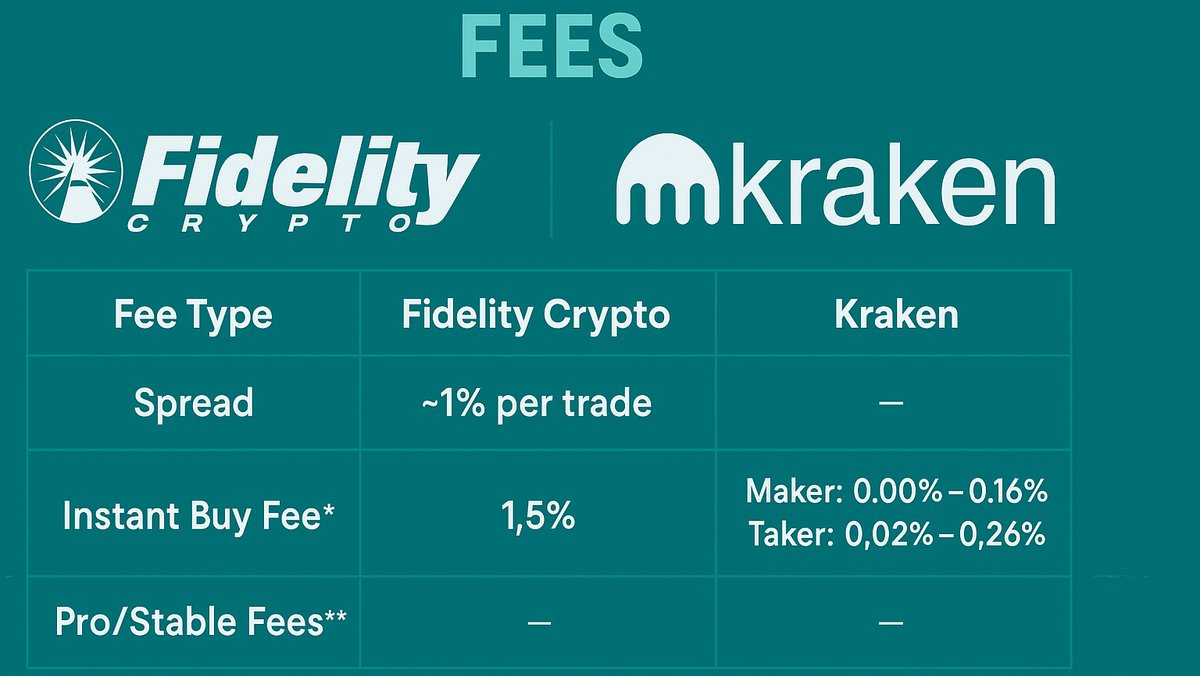
- Tiered Trading Fees: Fees range from 0.16%–0.26% for standard trades, decreasing for high-volume traders under a maker/taker model.
- Wide Asset Selection: Kraken supports over 70 cryptocurrencies, including emerging altcoins and stablecoins.
- Advanced Trading Options: Margin trading, futures contracts, and staking services enhance portfolio diversification and strategy execution.
- Global Accessibility: Offers multiple fiat on/off ramps and broad international reach.
Kraken’s infrastructure is optimized for high-frequency and sophisticated traders who require flexibility and cost efficiency.
Comparing Fees: Fidelity vs Kraken
When evaluating trading costs, investors must consider multiple dimensions:
Trading Fees
Fidelity charges slightly higher spreads on transactions but compensates with a secure, regulated environment. Kraken’s maker/taker fee model rewards high-volume trades, providing lower overall costs for active traders.
Deposit and Withdrawal Fees
Fidelity’s fiat integration reduces reliance on crypto network fees, though bank-related fees may apply. Kraken imposes network fees for withdrawals but offers free ACH deposits for U.S. users.
Account Minimums and Limits
Fidelity may require account minimums for certain investment accounts, whereas Kraken allows smaller deposits, making it accessible to novice investors or those exploring crypto with limited capital.
Additional Considerations
- Security: Fidelity provides institutional-grade security, ideal for long-term holdings.
- Trading Tools: Kraken offers advanced order types, charts, and API access for algorithmic trading.
- Regulatory Oversight: Fidelity aligns with traditional brokerage compliance standards; Kraken complies with international crypto regulations but offers less integration with traditional financial products.
Use Cases for Investors
Fidelity Crypto
- Long-term investment and retirement planning.
- Exposure to digital assets with regulatory safeguards.
- Institutional investors requiring secure custody solutions.
Kraken
- Active trading and portfolio rebalancing.
- Access to margin and futures for strategic leverage.
- Diverse crypto holdings including niche altcoins and staking opportunities.
Comparisons with Other Platforms
While Coinbase is often compared to Kraken and Fidelity, each platform caters to different investor needs:
- Coinbase: Beginner-friendly with higher fees than Kraken; strong regulatory compliance like Fidelity.
- Gemini: Emphasizes security and insurance; slightly higher fees but robust compliance.
- Fidelity vs Kraken: Fidelity prioritizes security and long-term investment, Kraken focuses on cost-efficient, active trading.
Risks and Considerations
Investors must navigate multiple risk factors:
- Market Volatility: Crypto markets are highly dynamic; fee differences are often minor relative to price swings.
- Regulatory Risk: Regulatory changes can affect accessibility, account restrictions, and compliance obligations.
- Operational Risk: Exchange outages, withdrawal delays, or cyber threats pose risks even to secure platforms.
- Liquidity Risk: Low liquidity on certain assets may increase slippage and transaction costs.
Risk mitigation strategies include diversification across exchanges, use of limit orders, and ongoing monitoring of regulatory developments.
Investment Outlook
Fidelity Crypto is ideal for risk-conscious, long-term investors seeking integration with traditional finance. Kraken remains the preferred platform for active traders seeking low fees, multiple trading options, and diverse crypto exposure. Strategic approaches like dollar-cost averaging on Fidelity or tactical trading on Kraken allow investors to optimize returns while managing risk. Adoption, network effects, and institutional participation are key drivers for long-term valuation.
Further Reading and Resources
Fidelity Crypto | Crypto Tax | Market Analysis
Frequently Asked Questions
Which platform has lower trading fees? Kraken generally offers lower fees for high-frequency trading. Fidelity prioritizes security over fee competitiveness.
Is Fidelity Crypto safer than Kraken? Fidelity provides institutional-grade custody and compliance. Kraken is secure but emphasizes active trading.
Can Fidelity be used for retirement accounts? Yes, Fidelity integrates crypto into certain retirement plans; Kraken does not.
Which platform is better for beginners? Fidelity offers simpler interfaces and educational resources; Kraken offers flexibility for experienced traders.