Fidelity Crypto vs Coinbase: Which is Better for US Investors?
Choosing the right crypto exchange is one of the most important decisions for U.S. investors entering the digital asset space. With a growing number of options, Fidelity Crypto and Coinbase stand out as two of the most trusted platforms. Fidelity brings decades of Wall Street credibility, while Coinbase has established itself as the first publicly listed U.S. crypto exchange. This article provides a head-to-head comparison of both platforms, analyzing fees, security, usability, and regulation to determine which may be better suited for different types of investors in 2025.
Background and Market Position
Fidelity Crypto entered the crypto market after years of offering Bitcoin custody to institutional investors. Today, it integrates digital asset trading into Fidelity’s broader brokerage platform, giving users the ability to view crypto holdings alongside stocks, ETFs, and retirement accounts. Its focus is on compliance and long-term wealth management.
Coinbase, launched in 2012, has become the most recognizable U.S. exchange. It supports a wide range of cryptocurrencies, offers educational resources, and caters to both beginners and advanced traders with Coinbase Pro (now integrated into a unified interface). As the first crypto company to go public, Coinbase carries a level of transparency rare in the industry.
Fee Comparison
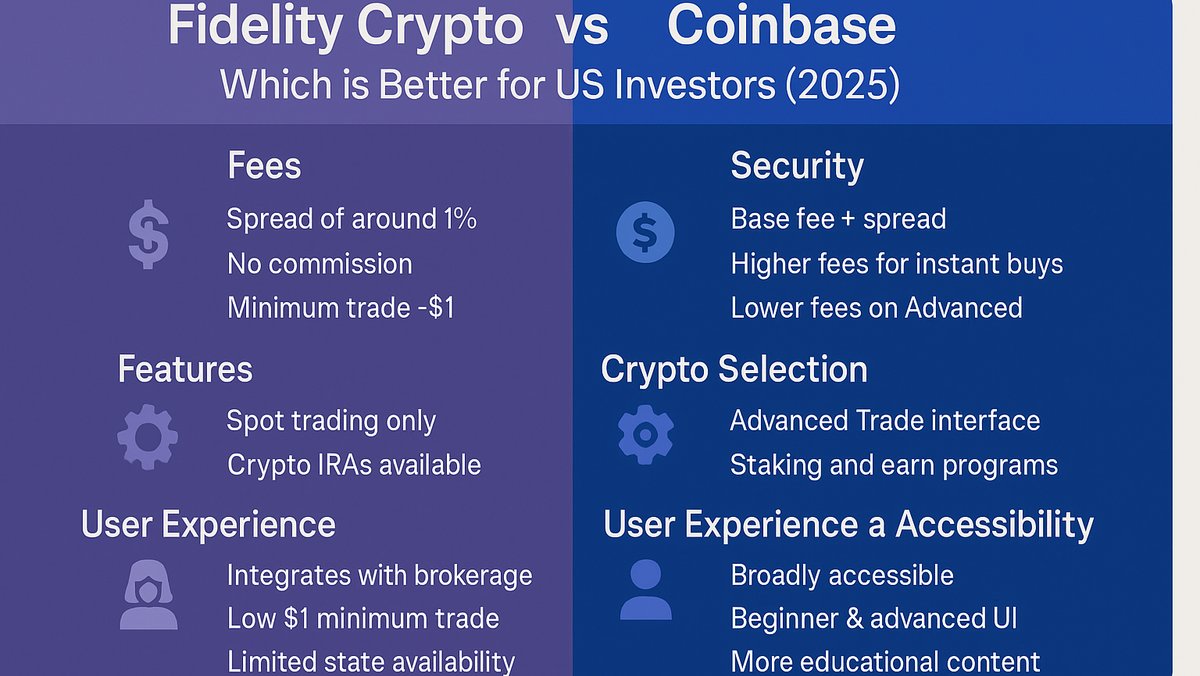
- Fidelity Crypto: Fees typically range between 0.35% and 0.50% per trade, with no hidden spreads. While slightly higher than global players like Binance, they reflect Fidelity’s regulated, secure infrastructure.
- Coinbase: Known for relatively high fees, often between 0.5% and 1.49% depending on payment methods. Coinbase Pro previously offered lower fees, but the unified platform has maintained a tiered pricing model based on trading volume.
Verdict: Fidelity has an edge on transparency, while Coinbase’s convenience may justify its higher costs for small retail investors.
Security and Trust
Security is a top concern for any crypto investor, and both platforms have strong reputations:
- Fidelity Crypto: Employs institutional-grade cold storage, multi-signature authentication, and insurance protection. As a legacy financial firm, it emphasizes compliance and regulatory oversight.
- Coinbase: Maintains 98% of assets in cold storage and insures hot wallet balances. Its public company status also enforces transparency, with quarterly financial reports filed with the SEC.
Verdict: Fidelity appeals to conservative investors seeking traditional financial safeguards, while Coinbase balances innovation with robust security protocols.
Ease of Use and Accessibility
- Fidelity Crypto: Designed with simplicity in mind, its interface integrates seamlessly with Fidelity accounts. However, its crypto selection is limited to major coins like Bitcoin and Ethereum, leaving out hundreds of smaller tokens.
- Coinbase: Offers a user-friendly app with educational modules, rewards, and access to 200+ cryptocurrencies. Its advanced charting tools cater to experienced traders, while its intuitive interface is ideal for beginners.
Verdict: Coinbase wins on token variety and user experience, while Fidelity prioritizes integration with traditional finance.
Regulation and Compliance
Both exchanges operate under U.S. regulation, but their approaches differ:
- Fidelity Crypto: Operates as part of a heavily regulated financial institution, making it one of the most compliant and institution-friendly platforms available.
- Coinbase: While also regulated, Coinbase has faced scrutiny from the SEC over certain tokens it lists, creating uncertainty about its future product offerings.
Verdict: Fidelity offers a more conservative, regulation-first approach, while Coinbase balances compliance with broader crypto adoption.
Best Fit for Different Investors
- Fidelity Crypto: Best suited for long-term investors, retirement account holders, and institutions who value regulatory safeguards and integration with existing portfolios.
- Coinbase: Best suited for retail investors, traders, and crypto enthusiasts looking for exposure to a wide range of tokens and features.
Risks and Considerations
Despite their strengths, both exchanges have drawbacks. Fidelity’s limited coin offerings may frustrate investors seeking diversification in altcoins. Coinbase, on the other hand, faces ongoing regulatory battles and higher costs for frequent traders. Investors must weigh security, cost, and access when making their choice.
Conclusion
So, which is better for U.S. investors in 2025? Fidelity Crypto excels in trust, compliance, and integration with traditional wealth management, making it ideal for conservative and institutional investors. Coinbase shines in accessibility, variety, and innovation, making it a great choice for beginners and active traders. Ultimately, the decision depends on whether an investor prioritizes safety and simplicity or variety and flexibility.
Further Reading and Resources
Crypto Exchanges | Market | Fidelity Crypto
Frequently Asked Questions
Which platform has lower fees, Fidelity or Coinbase? Fidelity generally has slightly lower and more transparent fees compared to Coinbase, though both are more expensive than global exchanges like Binance.
Which platform is safer? Both are highly secure, but Fidelity’s legacy financial background and insurance coverage make it particularly attractive to conservative investors.
Which platform offers more cryptocurrencies? Coinbase. It supports 200+ tokens, while Fidelity focuses only on major assets like Bitcoin and Ethereum.
Can I use Fidelity Crypto in my retirement account? Yes, Fidelity allows crypto exposure in retirement accounts, a unique feature compared to Coinbase.
Who should choose Coinbase? Retail traders, beginners, and crypto enthusiasts who want access to a wide range of tokens and easy-to-use trading tools.