Exchange Security Incidents History: Lessons from the Biggest Breaches
Since the early days of Bitcoin, cryptocurrency exchanges have been prime targets for hackers. Unlike traditional banks, most exchanges hold massive amounts of customer funds in centralized wallets, making them digital vaults for cybercriminals. This article provides a comprehensive history of major exchange security incidents, examines the tactics used by attackers, and highlights the lessons learned that continue to shape security practices in 2025.
The Early Era of Exchange Security Incidents
Mt. Gox (2011–2014)
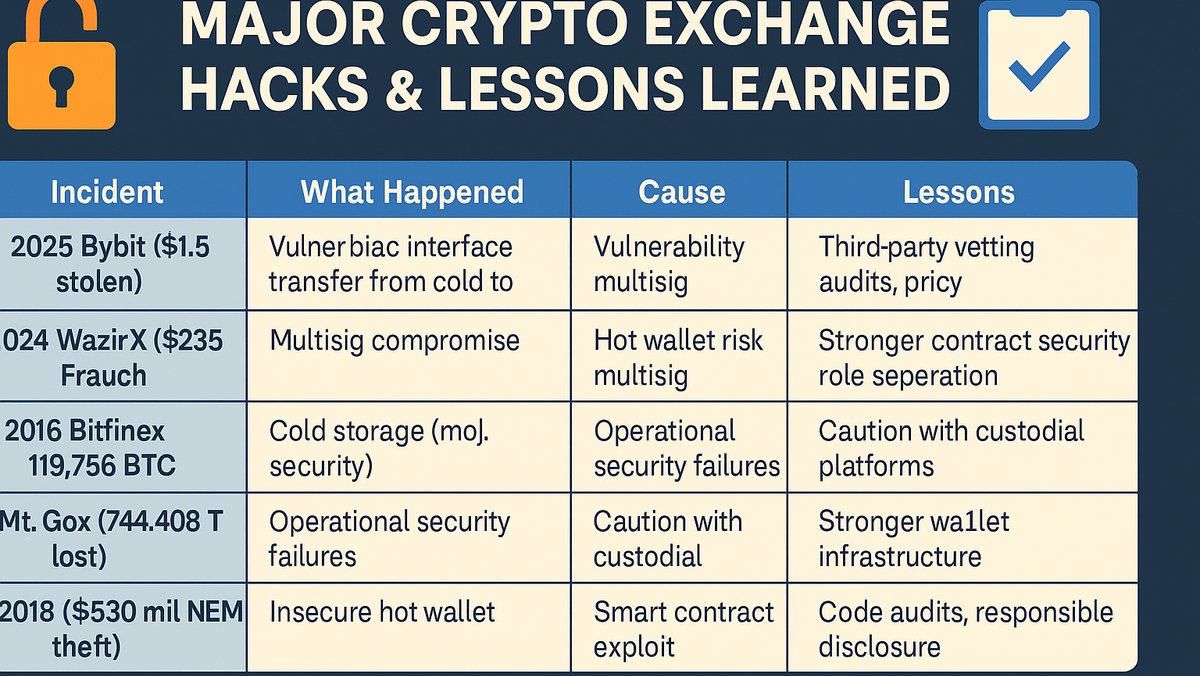
The collapse of Mt. Gox remains one of the most infamous events in crypto history. At its peak, Mt. Gox handled over 70% of all Bitcoin transactions. But poor security practices, lack of proper audits, and insider mismanagement led to the loss of approximately 850,000 BTC. This event underscored the dangers of centralized custodianship and sparked the mantra: Not your keys, not your coins.
Bitfinex (2016)
In 2016, Bitfinex lost nearly 120,000 BTC due to a vulnerability in its multi-signature wallet structure, which was provided by a third-party custodian. This incident highlighted how even advanced wallet setups can fail if not managed with strict operational controls. The exchange eventually repaid customers through a tokenized debt repayment model.
The Rise of Sophisticated Attacks
Coincheck (2018)
Japanese exchange Coincheck suffered a $530 million theft in NEM tokens. Hackers abused a security vulnerability hot wallets with inadequate security. While the exchange refunded customers, the security incident prompted Japan’s regulators to enforce stricter licensing requirements.
Binance (2019)
Hackers stole 7,000 BTC from Binance through a combination of deceptive credential-stealing scheme, API key theft, and malware. Binance’s “SAFU Fund” (Secure Asset Fund for Users) covered the losses, and the exchange strengthened its real-time monitoring and withdrawal security systems. This marked a turning point where exchanges began building insurance-like emergency funds.
Recent Exchange Security Incidents and Trends
- KuCoin (2020): $280M stolen, but most funds recovered through cooperation with blockchain projects and law enforcement.
- FTX (2022 collapse & security incident): Amid its bankruptcy, $400M mysteriously drained from wallets, suspected to be either a security incident or insider illegal deception.
- Liquid Global (2021): $90M lost, later acquired by FTX before its own collapse.
Common Tactics Used by Hackers
- Hot Wallet Security vulnerabilities: Compromising internet-connected wallets remains the most frequent attack vector.
- Deceptive credential-stealing scheme Attacks: Targeting employees and users to gain access credentials.
- Smart Contract Security vulnerabilities: DeFi platforms linked to exchanges are often compromised through coding vulnerabilities.
- Insider Collusion: Several security incidents have raised suspicions of internal involvement.
Lessons Learned from Exchange Security Incidents
- Cold Storage Is Essential: Exchanges now keep 90–98% of funds offline.
- Insurance Funds: Platforms like Binance and Coinbase have dedicated coverage for breaches.
- Proof-of-Reserves: Growing adoption of cryptographic audits ensures exchanges actually hold customer assets.
- Regulatory Oversight: Governments now require stricter custody rules, particularly in the U.S., EU, and Japan.
Risks and Considerations for Investors
Despite improvements, risks remain. Users face deceptive credential-stealing scheme illegal deception schemes, regulatory seizures, and systemic failures. The safest approach for long-term holders remains self-custody with hardware wallets, using exchanges only as access points for trading.
Investment Outlook
As of 2025, exchanges that emphasize transparency, insurance, and compliance are best positioned to thrive. Investors should prioritize security over convenience when selecting trading venues. The history of security incidents serves as a reminder: the crypto ecosystem is still maturing, and vigilance is non-negotiable.
Frequently Asked Questions
Which was the biggest exchange security incident? Mt. Gox (2014) remains the largest, with 850,000 BTC lost.
Have exchanges gotten safer? Yes, with proof-of-reserves, insurance funds, and stronger regulations, but risks remain.
What can I do to protect my funds? Use 2FA, avoid keeping large amounts on exchanges, and store assets in hardware wallets.