dYdX Brings Solana Spot Trading On-Chain for U.S. Users: Why This Pivot Matters
For years, dYdX has been shorthand for one thing: decentralized perpetual contracts. The protocol built its reputation as an orderbook-based venue where on-chain infrastructure meets professional-grade derivatives. Now, the team behind it is deliberately rewriting that story. dYdX Labs has launched its first spot trading product, starting with Solana markets, and opened access to U.S. users for the first time.
The headline seems straightforward: Solana spot trading, globally available, including to traders in the United States, while derivatives remain unavailable in that jurisdiction. Underneath, however, this move combines three strategic shifts:
- A derivatives-focused DEX expanding into spot markets.
- A deeper alignment with the Solana ecosystem.
- A carefully structured entry into the most complex regulatory market in the world.
This article unpacks why dYdX chose this path, what it means for U.S. users, how Solana fits into the picture, and what the launch tells us about the next phase of DeFi market structure.
1. What exactly did dYdX launch?
The new product is a spot trading interface for Solana-based assets, offered through dYdX Labs and built around the performance characteristics of the Solana network. In practical terms, users can connect a wallet, deposit funds, and trade assets in the Solana ecosystem at the current market price, with no leverage and no derivative exposure.
Two features stand out:
- Access for U.S. users: Up to now, dYdX’s flagship perpetuals were not available to U.S. residents. The new spot product has been structured so that U.S.-based traders can participate for the first time, while perpetual contracts remain outside the U.S. perimeter.
- Solana as the initial focus: The first batch of spot markets is built around Solana assets, reflecting a deliberate bet on a high-throughput, low-fee L1 as the execution layer for order placement and settlement.
dYdX has also signalled that this is not a one-off experiment. Management has framed spot trading as part of a broader roadmap to become a full-spectrum decentralized trading venue, while still remaining anchored in the principles that made the platform successful in the first place: on-chain infrastructure, transparency and self-custody.
2. From derivatives specialist to multi-product platform
To understand why this launch matters, it helps to recall where dYdX comes from. The protocol built its name on perpetual swaps and a central limit orderbook model, first on Ethereum and more recently on an app-chain architecture. Over time, it processed more than a trillion dollars in cumulative volume, attracting both sophisticated individual traders and professional market makers.
That strategy worked, but it also created constraints:
- Derivatives are subject to stricter scrutiny in many jurisdictions, particularly in the United States.
- A derivatives-only brand can make it harder to onboard users who simply want direct spot exposure without margin or complex funding mechanics.
- Depending on one product type concentrates both regulatory and business risk.
By launching spot, dYdX is attempting to rebalance this profile:
- Spot markets broaden the audience to users who prefer straightforward asset ownership.
- They create a more natural pipeline between casual users and advanced derivatives, at least in regions where derivatives are permitted.
- They align better with the requirements of sensitive jurisdictions such as the United States, where spot activity and derivative activity are often treated differently by regulators.
In other words, this is not a retreat from derivatives, but a lateral expansion. The protocol is positioning itself as infrastructure for multiple layers of market activity: spot, perps, and potentially new products that sit somewhere in between.
3. Why start with U.S. access via spot only?
On the surface, opening U.S. access through spot markets while keeping derivatives unavailable looks like a compromise. Strategically, it is more than that. It is a way to test three hypotheses at the same time:
- There is demand for decentralized venues even in markets dominated by large centralized platforms.
- U.S. users will engage with self-custodial, on-chain infrastructure if the user experience is good enough.
- Regulators will be more comfortable with non-leveraged spot markets than with complex derivative products, at least in the near term.
Comments from dYdX leadership have consistently emphasised that regulatory realities shaped the rollout. Public statements and interviews with the team indicate that spot trading for assets like Solana is seen as a way to enter the U.S. market while avoiding the most disputed areas of policy, such as leveraged derivatives for retail users.
From an analytical perspective, this approach offers several advantages:
- It lets dYdX build relationships with U.S. regulators and compliance teams under a relatively simpler product profile.
- It helps the protocol observe real user behaviour in a high-value market before deciding whether and how to extend the product set.
- It sends a signal to institutions that dYdX is willing to shape its roadmap around long-term, compliant participation rather than chasing short-term volume at any cost.
At the same time, the decision to keep perpetuals unavailable in the U.S. underscores an important reality: DeFi cannot escape regulation simply by running on a blockchain. When a team builds interfaces, brands and user funnels that clearly target a jurisdiction, supervisory expectations will follow. Spot-only access is therefore not just a business choice; it is part of a broader conversation about how decentralized platforms coexist with national legal frameworks.
4. Why Solana is at the centre of the new product
Choosing Solana as the first spot market is not a coincidence. It reflects a convergence of technology, ecosystem depth and user behaviour.
From a technical standpoint, Solana offers:
- High throughput and low latency, enabling rapid order updates.
- Low transaction fees, which matter when users place and cancel many small orders.
- An active ecosystem of wallets, infrastructure providers and analytics tools.
For a venue built on an orderbook model, these features are not cosmetic. They directly affect how tightly spreads can be quoted and how resilient the system is under heavy load. A congested, high-fee environment can erode the advantages of an on-chain orderbook, whereas a performant network makes the model more viable.
From an ecosystem perspective, Solana has become a focal point for experimentation in DeFi, consumer applications and new issuance formats. By aligning more closely with Solana, dYdX is tapping into a user base that is already comfortable with:
- On-chain activity as a default, not an exception.
- Fast-moving markets and high transaction volumes.
- Non-custodial wallets as primary access points rather than as an afterthought.
Strategically, the integration also plays to a bigger narrative: multi-chain DeFi. dYdX’s journey has already taken it from Ethereum to an app-chain architecture, and now to deeper engagement with Solana. The long-term implication is that DeFi venues may increasingly treat execution layers as modular components, choosing different chains for different product lines based on performance and user profile.
5. What changes for U.S. users in practice?
For U.S.-based users, the new Solana spot product does not magically remove all friction, but it does open several new possibilities.
5.1. Access to decentralized infrastructure without leaving the regulatory perimeter
Until now, many U.S. users who wanted on-chain trading faced a difficult choice: either rely on offshore venues that might later restrict access, or stick to centralized platforms that do not fully leverage the transparency and composability of DeFi. A spot-only, self-custodial product from a known DeFi brand offers a middle ground.
Users can:
- Connect wallets and maintain control of their assets.
- Trade on an interface that is designed from the ground up for on-chain execution.
- Do so within a framework that has been deliberately shaped to align with U.S. rules around non-derivative products.
5.2. A different risk profile than centralized platforms
The move also highlights an important educational point: the risk model of a self-custodial, on-chain platform is different from that of a centralized exchange. Users gain protection from certain types of custodial failure, but they take on new responsibilities:
- Securing private keys and backup phrases.
- Understanding how to manage network fees and transaction confirmation times.
- Being aware that smart-contract and protocol risks, while mitigated by audits and open-source review, cannot be eliminated entirely.
For U.S. users accustomed to custodial platforms, this will require a shift in mindset. The upside is greater control and transparency; the cost is a higher need for personal operational discipline.
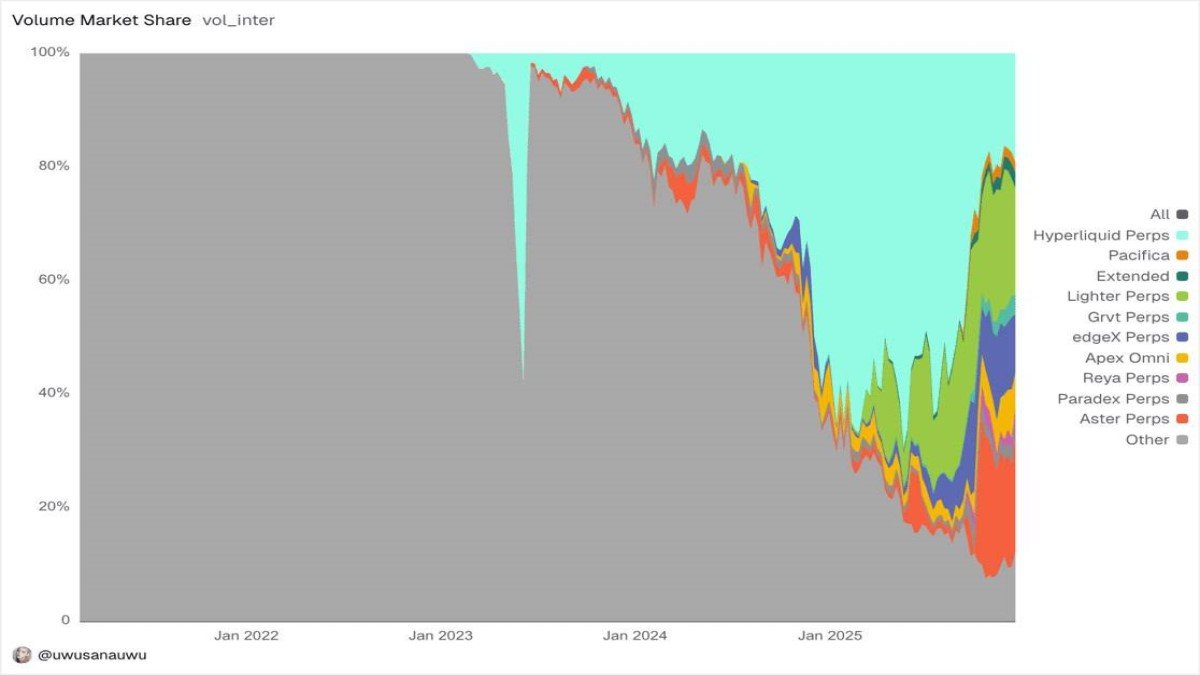
6. Competitive dynamics: DEXs, CEXs and hybrid access layers
The dYdX move also intersects with a broader competitive trend. Centralized exchanges and DeFi protocols are increasingly building hybrid access layers that route users into on-chain liquidity while keeping a familiar front-end experience.
Recent developments — such as large exchanges enabling routing into on-chain liquidity for networks like Solana without individually listing every token — show that the line between 'on-chain' and 'off-chain' is becoming blurred at the user level.
In this environment, dYdX’s strategy can be read as:
- Doubling down on being a pure on-chain venue, with an architecture specifically designed for decentralized execution.
- Still meeting users where they are, by offering product types (spot markets) and jurisdictions (U.S. access) that have traditionally been dominated by centralized players.
Whether this approach wins market share will depend less on slogans and more on details: latency, fee structure, user support, reliability during volatile periods, and the breadth of assets eventually supported.
7. Regulatory signalling: a case study in pragmatic DeFi expansion
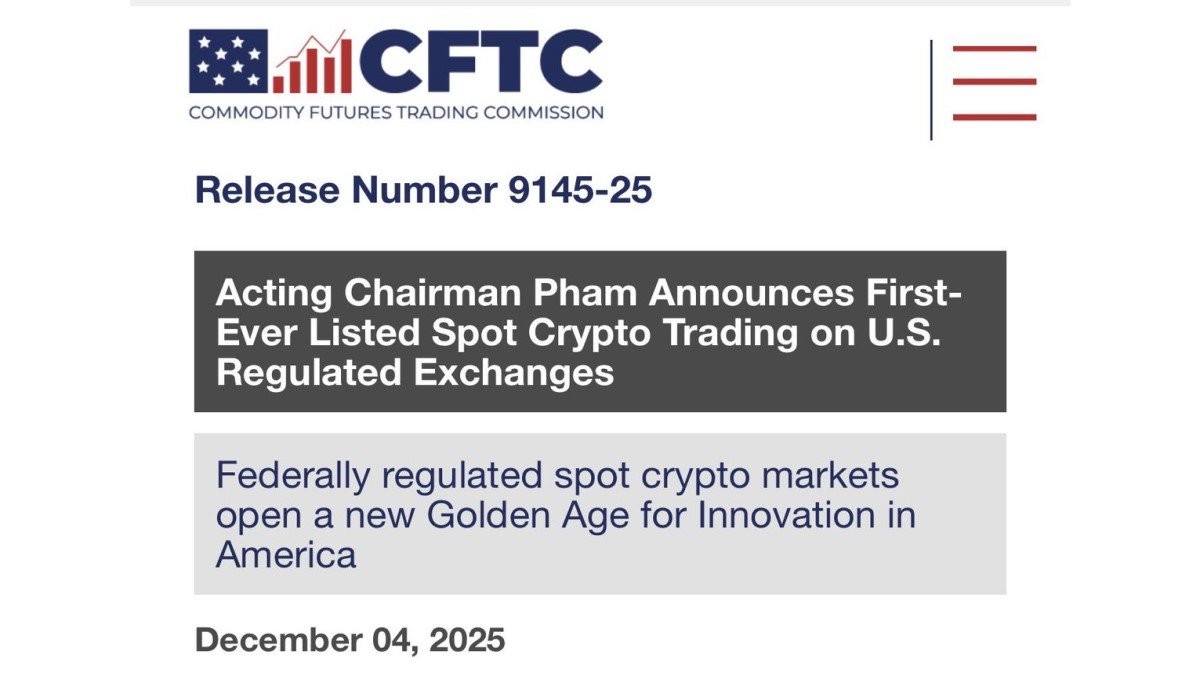
From a policy standpoint, dYdX’s Solana spot launch is interesting because it is neither confrontational nor purely defensive. Instead, it is a case study in how a DeFi team can expand into a sensitive jurisdiction by adjusting the product mix and access model.
Key elements of that approach include:
- Product segmentation: Perpetual derivatives remain outside the U.S., where they raise the most supervisory questions, while spot trading provides a path to engagement.
- Emphasis on transparency and self-custody: The team repeatedly highlights that users retain control of their assets and can verify activity on-chain, aligning with regulatory interest in robust record-keeping and segregation of client funds.
- Incremental roadmap: The expansion is framed as one stage in a longer journey, not as a sudden push for maximum product coverage on day one.
For other DeFi protocols watching from the sidelines, this launch offers a template: focus first on products that are easier to explain within existing legal frameworks, prove reliability and user protection, then revisit more complex offerings only when the regulatory climate becomes clearer.
8. What it means for the broader DeFi narrative
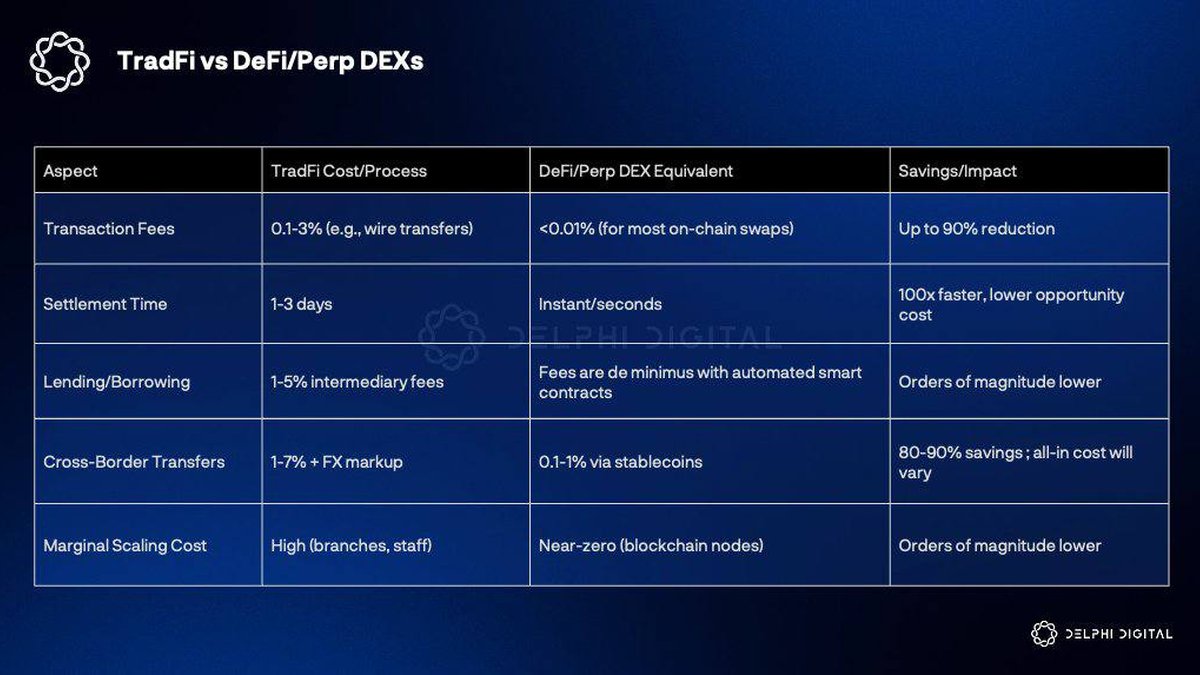
Stepping back, the dYdX Solana spot launch fits into a larger trend: DeFi as a layer of market infrastructure rather than a separate universe. In the last year, we have seen traditional institutions explore tokenized bonds, on-chain commercial paper and stablecoin-based settlement, while regulators debate how to supervise these new rails.
In parallel, DeFi-native venues are moving in the opposite direction, seeking greater alignment with the traditional system:
- Launching spot products that resemble familiar market structures.
- Talking openly about regulatory engagement and jurisdictional differences.
- Building for performance and uptime in ways that professional users expect.
The result is a gradual convergence. Over time, the distinction between 'CeFi' and 'DeFi' may matter less to end users than questions such as: Who controls the keys? How transparent is the ledger? What recourse exists if something goes wrong? Which jurisdictions does the platform deliberately serve, and how?
In that emerging landscape, dYdX’s decision to put Solana spot trading at the front of its U.S. expansion is a way of saying: the technology is ready to handle serious markets; the question now is how to integrate it responsibly.
9. Key takeaways for readers
For readers approaching this news from an educational and analytical angle, several points are worth emphasising:
• dYdX is no longer just a derivatives venue. Spot trading, starting with Solana, is a meaningful extension of its role in the DeFi ecosystem.
• U.S. access via spot markets is a carefully calibrated move. It allows engagement with a major market while avoiding the most contested product types.
• Solana is a strategic choice, not an incidental one. Its performance characteristics align with dYdX’s orderbook ambitions and with the behaviour of a growing on-chain user base.
• Self-custody and transparency remain central. Users gain the benefits of on-chain verification but must also take responsibility for key management and operational security.
• The launch is a signal about where DeFi is heading. Less about speculative novelty, more about quietly rebuilding financial market plumbing on open infrastructure.
The most important question is not whether this specific product will immediately transform volumes or market share. It is whether this kind of measured, infrastructure-focused expansion becomes the norm. If it does, the next few years may look less like a battle between old and new systems, and more like a gradual merging — with venues like dYdX, and networks like Solana, sitting at the point where those systems meet.