Aave, DAOs and the Legal Gap in DeFi: Who Really Owns the Protocol?
The crypto industry has seen this movie before. First came debates around Uniswap and Uniswap Labs: when a protocol becomes globally important, where does the boundary lie between an open network and the private company building around it? Now a similar question is being asked of Aave, the largest lending and borrowing protocol in digital assets.
At the centre of the discussion is a seemingly simple decision. Aave Labs – the company that develops much of the core software – recently switched the integrated swap interface inside Aave from Paraswap to CowSwap. At the same time, swap fees that previously accrued to the Aave DAO treasury were redirected to Aave Labs itself. Community delegates estimate that the DAO has missed out on roughly 400,000 USD of potential revenue since the change.
On the surface this is a dispute about income sharing. At a deeper level, it is a question about property rights, accountability and regulation in decentralised finance. If a protocol is governed by a DAO, but the real revenue stream is routed through the user interface owned by a private company, who is actually in charge? And how should lawmakers treat such a structure?
1. Aave as a hybrid between public infrastructure and private business
Aave occupies a unique position in crypto. On-chain, it behaves like a piece of open infrastructure. Pools of collateral, risk parameters and interest rate curves are defined by smart contracts and adjusted through token-holder votes. The contracts can run for years without direct control from any single corporate entity, and the AAVE token is widely held by a global community.
Off-chain, however, the experience most users see is provided by Aave Labs. The website, the interface, documentation, partnerships and much of the research and security work are carried out by a company with staff, costs and investors. That company needs a sustainable business model. It cannot live off good will alone, nor can it continuously sell down its own token holdings without damaging market confidence.
This is where interface fees come in. Instead of encoding every source of income inside the protocol itself, many DeFi teams route a portion of activity – such as token swaps executed through an embedded aggregator – through front-end contracts controlled by the company. Those contracts charge a fee and forward it to a treasury owned by the company, not the DAO.
In Aave’s case, the decision to move from Paraswap to CowSwap and to reroute the fees has highlighted how much power the interface provider holds. The smart contracts that secure more than 30 billion USD of user assets still behave as designed. Yet, the cash flow associated with a popular feature has shifted away from the on-chain community without a direct on-chain vote. For some token holders, that feels like a breach of an informal social agreement: they supply capital and governance, but the company captures the incremental revenue.
2. The quiet tension between DAOs and development companies
The episode illustrates a broader structural tension in DeFi. To launch a successful protocol, founders need three ingredients:
- Capital – users who provide liquidity or collateral and often buy governance tokens.
- Usage – activity on the protocol that generates fees and builds network effects.
- Execution – a dedicated team that designs the contracts, maintains the code and responds to security issues.
DAOs were created to give users a collective voice over key parameters – collateral types, risk limits, fee structures – and to avoid treating governance tokens as mere speculative chips. At the same time, the founding company rarely wants to acknowledge full legal ownership of the protocol. Doing so could pull them into the same regulatory and tax framework as a traditional financial institution, with all the associated licensing obligations.
The result is an awkward compromise. On-chain smart contracts are presented as neutral infrastructure owned by a DAO. Off-chain companies argue that they simply build tools around that infrastructure, even if those tools are essential to most users. Revenue such as interface fees, analytics subscriptions, or institutional integrations flows first to the company. The DAO receives token distributions, occasional grants, or a share of protocol-level fees – but rarely full control of all income streams.
The Aave situation makes this visible. From the DAO’s point of view, fees generated by swaps executed through the Aave interface are part of the economic engine of the protocol. From Aave Labs’ perspective, those fees pay for design, engineering, security audits and customer support – all functions that would be shouldered by a commercial firm in any other industry.
3. Why regulation and taxation have not caught up
This hybrid structure is precisely what confuses regulators and tax authorities. A few key questions illustrate the gap:
• Who is the service provider? If a user interacts with the Aave protocol through the Aave Labs interface, is the user contracting with the DAO, with Aave Labs, or with both? From a legal standpoint, there is often no clear contract spelling this out.
• Who should pay tax on protocol revenue? The DAO treasury is usually denominated in tokens and controlled by a multisig or voting system that spans jurisdictions. Many countries do not yet recognise a DAO as a legal person. Tax authorities may therefore look to the founding company as the closest identifiable entity, but that company insists it does not own the on-chain protocol.
• Who is accountable for consumer protection? If something goes wrong – a design flaw, an upgrade issue, a mispriced market – regulators want to know who can be held responsible. Saying “no one controls the protocol” is not satisfying to agencies whose mandate is to protect users.
The practical outcome is that everyone sits in a grey zone. Companies try to distance themselves enough from the protocol to avoid classification as a full-scale financial institution, while still operating the main user interface and collecting fees. DAOs claim to be in charge of strategic decisions, yet frequently lack full visibility or control over off-chain business arrangements.
For governments, enforcing tax collection directly on a DAO is extremely challenging. A revenue stream can be split across thousands of addresses, routed through different chains, or held in treasuries controlled by pseudonymous delegates. Attempting to tax each end user individually would be even more complex. This is one reason why regulators are drawn to central points such as exchanges or custodians: they are legally identifiable and already integrated into the conventional financial system.
4. The Aave case as a governance stress test
The dispute around the CowSwap integration therefore acts as a governance stress test. The amounts involved – around 400,000 USD so far – are not existential for a protocol of Aave’s scale, but the symbolism is large.
From the DAO’s perspective, several concerns emerge:
- Alignment of incentives: If a development company can redirect revenue without a community vote, what prevents it from prioritising its own balance sheet over long-term protocol health?
- Precedent: Once a company has established that interface fees belong to it, similar decisions could follow for other product lines, gradually shrinking the economic role of the DAO.
- Signal to token holders: Governance token buyers often view themselves as long-term partners in a shared project. When cash flows are diverted away from the DAO, that relationship can feel more like a one-way subsidy.
On the other side, Aave Labs could argue that without a sustainable corporate revenue stream, it cannot retain talent, pay for audits, or negotiate institutional partnerships. Asking a company to act as a public utility while depriving it of recurring revenue is not realistic. Relying only on token sales would create its own problems, including volatility and the perception that the team’s incentives are short-term.
This is why the controversy has resonated far beyond Aave token holders. Many DeFi founders and community members see their own projects reflected in it. If one of the industry’s flagship protocols struggles to balance DAO expectations with corporate sustainability, what hope is there for smaller teams?
5. Possible paths toward clearer frameworks
The good news is that the Aave episode also hints at ways forward – not only for this specific protocol, but for the wider DeFi ecosystem.
5.1. Formal agreements between DAOs and development companies
One obvious step is to move from informal expectations to written agreements. A DAO can sign contracts through a legal wrapper – a foundation, association or similar structure – that spell out how interface fees are handled, what share flows back to the DAO, and what the company is expected to deliver in return.
Such agreements could include:
- Clear revenue-sharing formulas for front-end activity.
- Service level commitments: response times, security processes, documentation standards.
- Dispute resolution mechanisms, so disagreements can be addressed without public confrontation.
For regulators, these documents provide a more concrete map of responsibilities. For token holders, they transform vague promises of “community ownership” into enforceable rights.
5.2. Greater transparency around fee routing
Another practical measure is radical transparency. Interfaces can display, in real time, how each basis point of fees is allocated: what portion goes to liquidity providers, what portion to the protocol treasury, and what portion to the development company or integration partners.
With that level of clarity, users and delegates can evaluate whether the split feels fair. If a company decides to adjust its share, it becomes immediately visible rather than hidden inside contracts that only a few specialists read. Over time, the market can reward projects that align economic flows with their decentralisation narrative.
5.3. Evolving legal recognition for DAOs
Several jurisdictions are experimenting with new labels for DAOs – from foundation structures in some European countries to limited liability wrappers in parts of the United States. While none are perfect, they point to a future where a DAO can sign contracts, file tax returns and hold assets in a way regulators understand.
If Aave’s on-chain governance had such a wrapper, it could negotiate with Aave Labs on more equal footing. It would still not “own” the smart contracts in the traditional sense, but it could act as the representative of token holders in off-chain legal processes. That would reduce the temptation for development companies to make unilateral decisions on revenue streams.
6. What users and investors can learn from the dispute
For everyday market participants, the Aave case is a reminder to look beyond headlines and token prices. When evaluating a protocol, some practical questions are worth asking:
- Where do the main revenue streams actually go: to a DAO treasury, to a private company, or to both?
- Is there a written framework that aligns the interests of token holders and the development team, or is everything based on informal expectations?
- How difficult would it be for a company to switch fee direction again in the future?
- Does the DAO have real control over key parameters such as risk settings, fee levels and product launches, or is governance limited to symbolic votes?
These questions do not have to lead to a negative conclusion. A protocol can be a healthy investment even if a company collects a portion of the fees, as long as that role is transparent and justified. The risk arises when the marketing message emphasises community ownership, yet the economic reality tells a different story.
7. Innovation, taxation and the next phase of DeFi
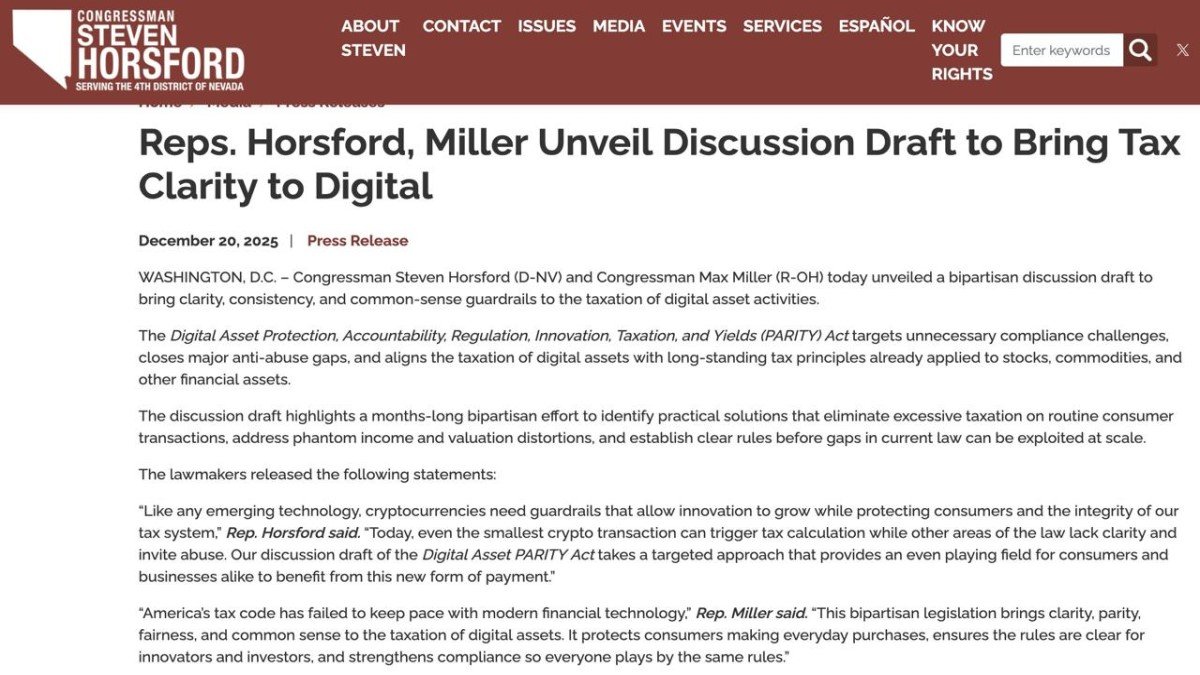
From the perspective of governments, Aave and similar cases also highlight how difficult it is to design rules that protect users without freezing innovation. If authorities attempt to treat DeFi protocols exactly like banks, many teams will simply move offshore or deploy more anonymous, immutable contracts. Yet if there is no framework at all, disputes over revenue, responsibility and taxation will continue to surface in an ad hoc way.
The likely outcome is a gradual middle path. Development companies may be expected to register in specific jurisdictions, comply with basic disclosure rules and pay tax on corporate income, while DAOs receive more recognition as non-traditional governance structures. In exchange, regulators may offer clarity on what kinds of token distribution and protocol design are acceptable.
Aave’s internal debate does not provide a final answer, but it functions as a live case study for policymakers. It shows that behind every apparent 'decentralised' application, there are concrete human choices about who gets paid, who takes responsibility and how risks are shared.
8. Conclusion: a necessary conversation for a maturing sector
The conflict over swap fees between Aave Labs and the Aave DAO is more than a dispute about 400,000 USD. It encapsulates the core challenge of decentralised finance in 2025: protocols are marketed as collective, open networks, yet their most important decisions and income streams often run through traditional corporate entities.
Until the legal framework catches up, these tensions will continue to surface. The industry can choose to treat them as isolated controversies, or it can use them as prompts to build clearer agreements, better transparency and stronger alignment between builders and communities.
For now, Aave stands at the intersection of these worlds: part public infrastructure, part private enterprise. How it resolves this episode may set an informal template for the next wave of DeFi projects – and help determine whether decentralised finance can move from experimental architecture to durable, widely trusted financial plumbing.
Disclaimer: This article is for educational and informational purposes only and does not constitute financial, investment or legal advice. Digital assets involve risks, including potential loss of principal. Always conduct your own research and consider consulting qualified professionals before making investment decisions.